
ABC v. Aereo: When 'Looks Like Cable' Beat the Engineering
The Supreme Court held that Aereo's array of dime-sized antennas publicly performed broadcast television, treating the service as functionally identical to a cable system despite its individualized architecture.
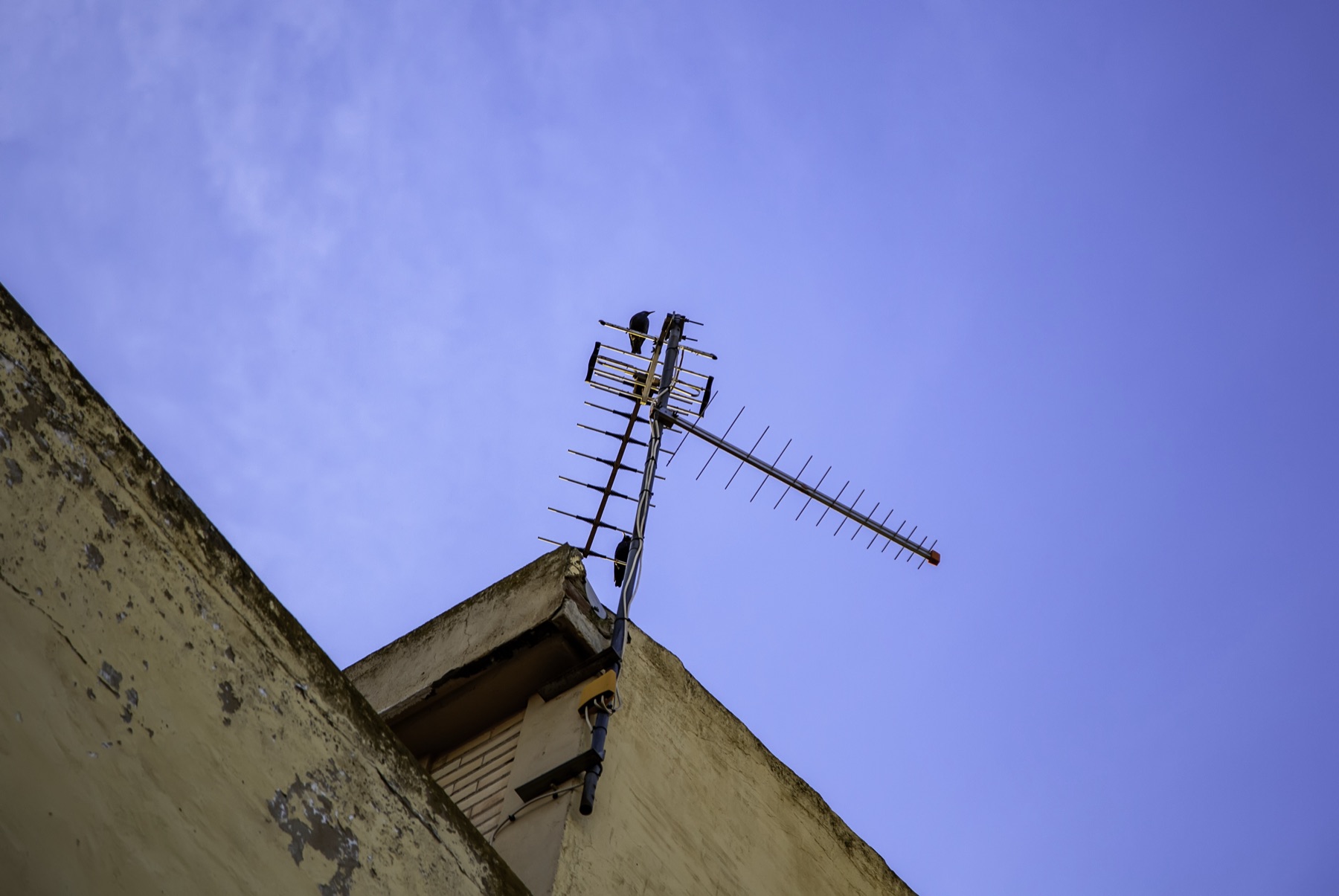
American Broadcasting Companies, Inc. v. Aereo, Inc., 573 U.S. 431 (2014), No. 13-461, decided June 25, 2014, is the Supreme Court’s most consequential modern interpretation of the public-performance right. By a 6-3 vote, with Justice Breyer writing for the majority, the Court held that Aereo’s internet streaming of over-the-air broadcast television “publicly performed” copyrighted works under 17 U.S.C. § 106(4) and the Transmit Clause of § 101 — and therefore infringed. The opinion is famous for elevating functional resemblance over technical architecture, and infamous for the boundary problems it left in its wake.
At a glance
- Case: American Broadcasting Companies, Inc. v. Aereo, Inc., 573 U.S. 431 (2014), No. 13-461
- Decided: June 25, 2014; opinion by Justice Breyer (joined by Roberts, Kennedy, Ginsburg, Sotomayor, and Kagan); dissent by Justice Scalia (joined by Thomas and Alito)
- Holding: Aereo’s retransmission of broadcast television to subscribers is a public performance of copyrighted works and infringes the broadcasters’ § 106(4) exclusive right
- Frame: The Court read the 1976 Act’s Transmit Clause against its purpose of bringing cable-style retransmission within the public-performance right
The technology built to lose a label
Aereo’s system was engineered to thread a doctrinal needle. Rather than capturing a broadcast signal once and sending it to many customers — the classic cable model — Aereo assigned each subscriber an individual, dime-sized antenna housed in a central facility. When a subscriber selected a program, “their” antenna tuned to the broadcast, a unique copy of the program was saved to a personal directory on Aereo’s servers, and that personal copy was streamed back to that subscriber alone. No two subscribers ever shared a transmission of the same copy.
The design was a direct response to Cartoon Network LP v. CSC Holdings (the Cablevision case), in which the Second Circuit held that transmissions of unique, user-specific copies were private rather than public performances. Aereo’s bet was that by making every transmission a one-copy-to-one-viewer event, it could deliver live broadcast television to paying subscribers while staying outside § 106(4) entirely. The Second Circuit accepted that logic and denied the broadcasters a preliminary injunction.
”An overwhelming likeness to the cable companies”
The Supreme Court reversed by going behind the architecture. Justice Breyer’s opinion rested on two sequential questions: Does Aereo “perform” at all, and if so, does it perform “publicly”?
On the first, the Court read the Transmit Clause in light of the 1976 Act’s history. Congress enacted that Act partly to overturn two earlier decisions — Fortnightly Corp. v. United Artists and Teleprompter Corp. v. CBS — that had exempted community-antenna (cable) systems from the performance right by treating them as passive conduits, mere enhanced viewer equipment. By defining “to perform … publicly” to include transmitting a performance to the public, Congress deliberately swept cable retransmission within the statute. Aereo, the majority found, was for all practical purposes a cable system: it sold a subscription service that received broadcast programs and retransmitted them to paying members nearly contemporaneously. Its “overwhelming likeness” to the cable companies Congress targeted meant it, too, “performed.”
On the second question, the Court held the performance was public. The individualized-copy architecture did not matter, because the Transmit Clause covers transmissions “whether the members of the public capable of receiving the performance receive it in the same place or in separate places and at the same time or at different times.” Aereo communicated the same underlying broadcast — the same images and sounds — to a large number of unrelated paying strangers. That those strangers received the content from distinct copies, at slightly different moments, did not convert a public service into a bundle of private ones. The relevant “performance” is the broadcast work being conveyed to the public, not the particular file used to convey it.
Scalia’s dissent and the volitional-conduct objection
Justice Scalia’s dissent did not defend Aereo’s business; he allowed that Aereo’s conduct might well be unlawful under some theory, but objected to the route the majority took. His core point was doctrinal: direct infringement requires a volitional act of copying or transmitting by the defendant, and Aereo’s system was entirely automated and user-directed. The subscriber, not Aereo, chose the channel and triggered the transmission; Aereo was more like a copy shop with self-service machines than a content programmer. By holding Aereo a direct performer, the dissent warned, the majority displaced the established volitional-conduct requirement with an atextual “looks-like-cable” test of uncertain scope. Scalia predicted the Court’s “guilt by resemblance” approach would generate confusion in the lower courts — and chided the majority for crafting an ad hoc rule to reach a result it plainly wanted.
Open questions
The majority repeatedly stressed the limits of its holding, and those disclaimers are now where the action is. The Court insisted it was not deciding the copyright status of cloud-storage and remote-DVR services, in which users store and stream content they have lawfully acquired; it distinguished such services as involving subscribers who possess prior rights to the underlying material. But it offered no crisp test for separating an infringing Aereo from a lawful cloud locker, leaving technology companies to navigate by analogy. The decision also did not resolve the fate of the volitional-conduct doctrine for other § 106 rights, nor how the “looks-like-cable” frame should apply to genuinely novel distribution models that resemble no 1976-era business at all.
Implications
- For broadcasters: The retransmission consent and licensing regime is secure; services that capture and resell over-the-air signals to subscribers cannot escape the performance right by atomizing their architecture.
- For technology designers: Engineering a system to defeat a legal label is perilous. Courts may look through technical structure to economic and functional substance, especially where the design’s evident purpose is to avoid liability.
- For cloud and DVR services: The decision’s explicit carve-outs preserve room for lawful remote storage and playback, but the boundary is defined more by the Court’s reassurances than by a workable rule — a continuing source of risk.
- For the volitional-conduct doctrine: Aereo unsettled, without overruling, the requirement of a volitional act for direct infringement, complicating liability analysis for automated, user-driven platforms.
Frequently asked questions
Why did Aereo use thousands of tiny antennas? To argue that each subscriber’s stream came from a unique, individually-tuned antenna and a personal copy, making every transmission “private” under the Second Circuit’s Cablevision reasoning rather than a public performance.
Why didn’t that argument work? The Court looked past the architecture to function. Because Aereo behaved like the cable systems Congress meant to cover, and because the Transmit Clause reaches transmissions to the public even from separate copies at different times, the service publicly performed the works.
Does Aereo make my cloud DVR or storage locker illegal? The majority said its holding was limited and did not decide that question, distinguishing services whose users have lawful rights to the stored content. The exact line remains unsettled.
Authorities and sources
- American Broadcasting Cos., Inc. v. Aereo, Inc., 573 U.S. 431 (2014), No. 13-461 (June 25, 2014). Opinion and dissent via Justia and Cornell LII.
- Case file and 6-3 lineup: SCOTUSblog and Wikipedia summary.
- Practitioner analysis of scope and the volitional-conduct issue: Fenwick & West client alert.