
Feltner v. Columbia Pictures: The Jury's Role in Setting Statutory Damages
The Supreme Court held that the Seventh Amendment guarantees a jury trial on statutory copyright damages — including the amount itself — reshaping how infringement awards are decided.
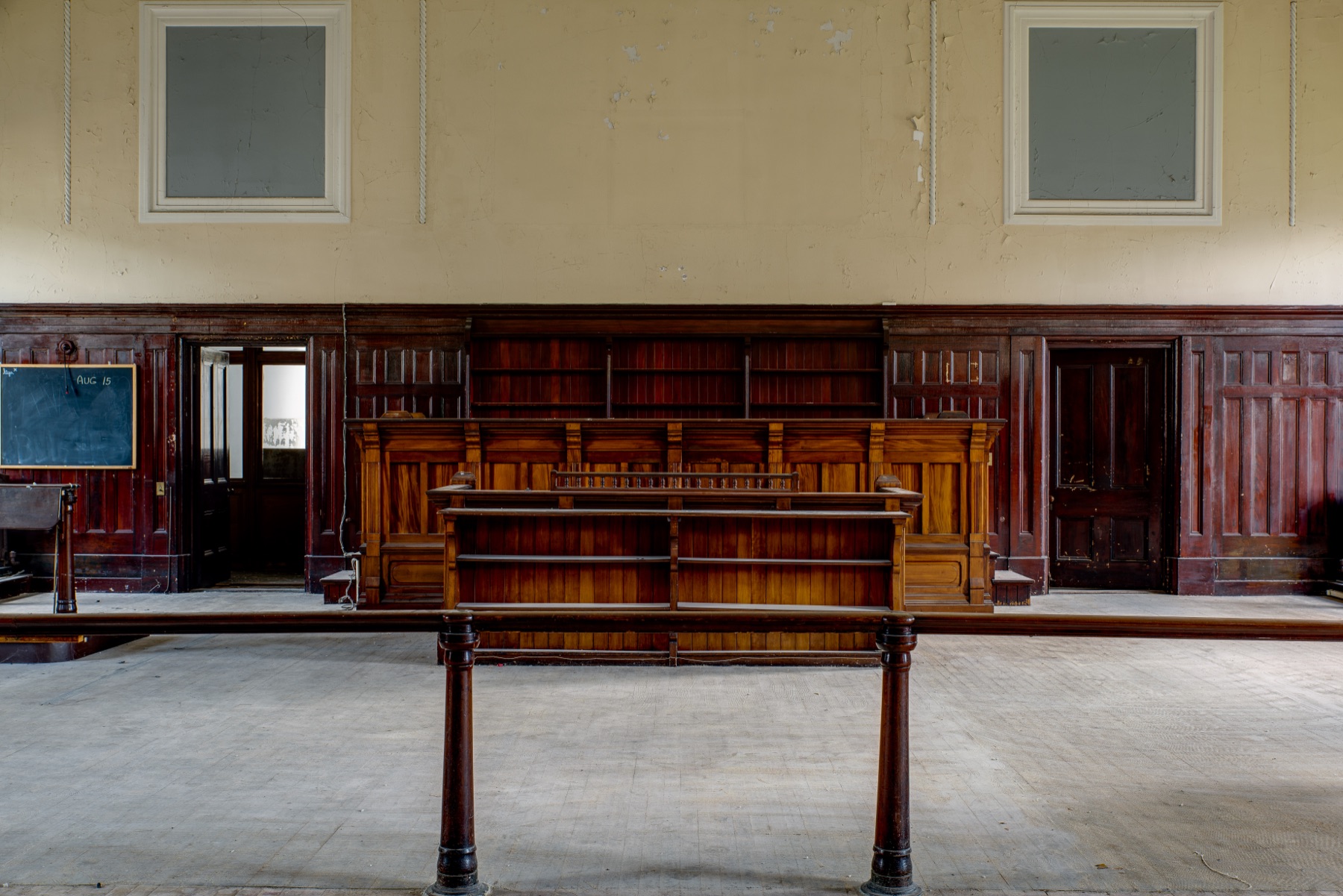
Feltner v. Columbia Pictures Television, Inc., 523 U.S. 340 (1998), No. 96-1768, decided March 31, 1998, is the foundational decision on the constitutional architecture of statutory damages under the Copyright Act. Justice Thomas wrote for the Court, holding that the Seventh Amendment provides a right to a jury trial on all issues pertinent to an award of statutory damages under § 504(c) — including the amount of the award. The decision arose from a dispute over delinquent television-licensing payments and an $8.8 million award entered by a judge, not a jury. Its reasoning continues to govern how every contested statutory-damages claim is structured.
At a glance
- Case: Feltner v. Columbia Pictures Television, Inc., 523 U.S. 340 (1998), No. 96-1768
- Decided: March 31, 1998; Justice Thomas for the Court (Justice Scalia concurring in the judgment)
- Statute: 17 U.S.C. § 504(c) (statutory damages)
- Holding: The Seventh Amendment affords a right to a jury trial on all issues pertinent to a § 504(c) statutory-damages award, including the amount; the statute itself does not provide that right, but the Constitution does
- Disposition: Ninth Circuit reversed; case remanded
The facts: broadcasts after a terminated license
C. Elvin Feltner controlled Krypton International Corporation, which in 1990 acquired three television stations in the southeastern United States. Columbia Pictures Television had licensed several series to those stations — including Who’s the Boss, Silver Spoons, Hart to Hart, and T.J. Hooker. After the stations fell behind on royalty payments, the parties attempted to restructure the debt; negotiations failed, and Columbia terminated the license agreements in October 1991. The stations kept broadcasting the programs anyway.
Columbia sued for copyright infringement and elected statutory damages under § 504(c). The district court found the infringement willful and denied Feltner’s request for a jury trial on statutory damages. Treating each broadcast of each episode on each station as a separate act of infringement, the court found 440 acts of infringement and awarded $20,000 per act, for a total of $8,800,000. The Ninth Circuit affirmed. The Supreme Court granted certiorari to decide whether either the statute or the Seventh Amendment guaranteed Feltner a jury.
Two questions: the statute, then the Constitution
The Court approached the case in two steps. First, it asked whether § 504(c) itself confers a right to a jury determination of statutory damages. The statute provides that “the copyright owner may elect … to recover, instead of actual damages and profits, an award of statutory damages … in a sum of not less than $750 or more than $30,000 as the court considers just” (with a higher ceiling for willful infringement). The Court read the phrase “as the court considers just,” in context, to refer to the judge rather than the jury, and it found no other textual signal that Congress intended a jury to fix the amount. So the statute did not supply the right.
That made the constitutional question unavoidable. Because the Court could not construe the statute to provide a jury right, it had to decide whether the Seventh Amendment compels one — a sequencing that itself illustrates the canon of avoiding constitutional questions only where a statute fairly permits.
The Seventh Amendment analysis
The Seventh Amendment preserves the right to a jury trial in “suits at common law” — understood to mean suits in which legal, as opposed to equitable, rights are at stake. The Court’s established two-part inquiry asks whether the action is analogous to one tried at law in 18th-century England before the merger of law and equity, and, if so, whether the particular remedy sought is legal in nature.
Justice Thomas surveyed the history and found that actions seeking damages for copyright infringement were tried in courts of law, before juries, both in England and in the early United States. There was a long tradition of juries assessing damages — including damages set within statutory ranges — in copyright and analogous infringement actions. Statutory damages, the Court concluded, are a substitute for actual damages and profits; they are a legal remedy designed to compensate and to deter, not an equitable one. Because the remedy is legal, the Seventh Amendment attaches.
The Court then took the decisive further step that gives the case its practical force. The jury right is not limited to the question of liability; it extends to the amount of statutory damages. Historically, the assessment of damages was a quintessential jury function, and the Court declined to carve the amount out of that tradition. If a defendant has a right to a jury on statutory damages at all, the jury must determine how much. Justice Scalia concurred in the judgment, agreeing that the Seventh Amendment required a jury but reasoning that the statute itself was best read to provide the right, making the constitutional holding unnecessary.
Open questions
Feltner settled that a jury must fix statutory damages when a party demands one, but it left the surrounding mechanics to later development. It did not specify the standards or instructions that should guide a jury exercising discretion across a wide statutory range, nor how appellate courts should review such awards for excessiveness. It did not address how the jury right interacts with the willfulness and innocent-infringement findings that move the statutory ceiling and floor — issues of who decides what that continue to recur. And because the right must be demanded, the decision left open how readily it can be waived and what a valid waiver requires.
Implications
- For copyright defendants: A defendant facing a statutory-damages claim may insist on a jury to set the amount, not merely to decide liability — a meaningful check on large judge-entered awards.
- For copyright owners: Electing statutory damages no longer guarantees a bench determination of the sum; owners must be prepared to present the amount to a jury and to frame willfulness accordingly.
- For trial practice: The decision makes the jury demand a critical early strategic choice and puts a premium on jury instructions that channel discretion within the statutory range.
- For remedies doctrine: Feltner confirms that statutory damages are a legal substitute for actual damages and profits, situating them firmly on the “legal,” jury-tried side of the law-equity divide.
Frequently asked questions
Did Feltner win the case outright? No. The Supreme Court reversed the $8.8 million award and remanded for a jury trial on statutory damages. The ruling concerned the process for setting damages, not whether infringement occurred.
Does the jury decide only liability or also the dollar amount? Both. The Court held the Seventh Amendment right extends to the amount of statutory damages, not just the existence of infringement.
Is the jury right automatic? It must be invoked. The Seventh Amendment guarantees the right when a party demands a jury; a party that does not properly demand one may be tried to the bench.
Authorities and sources
- Feltner v. Columbia Pictures Television, Inc., 523 U.S. 340 (1998), No. 96-1768 (Mar. 31, 1998). Opinion and holding via Justia and Cornell LII.
- Case syllabus and reasoning: Cornell LII syllabus and Wikipedia summary.
- Statute: 17 U.S.C. § 504(c).