
Sears v. Stiffel: The Pole Lamp That Made Copying a Federal Right
When Stiffel's lamp patents were held invalid, the Supreme Court ruled that no state unfair-competition law could stop Sears from copying the unpatented design — establishing that exclusivity flows only from the federal patent bargain.
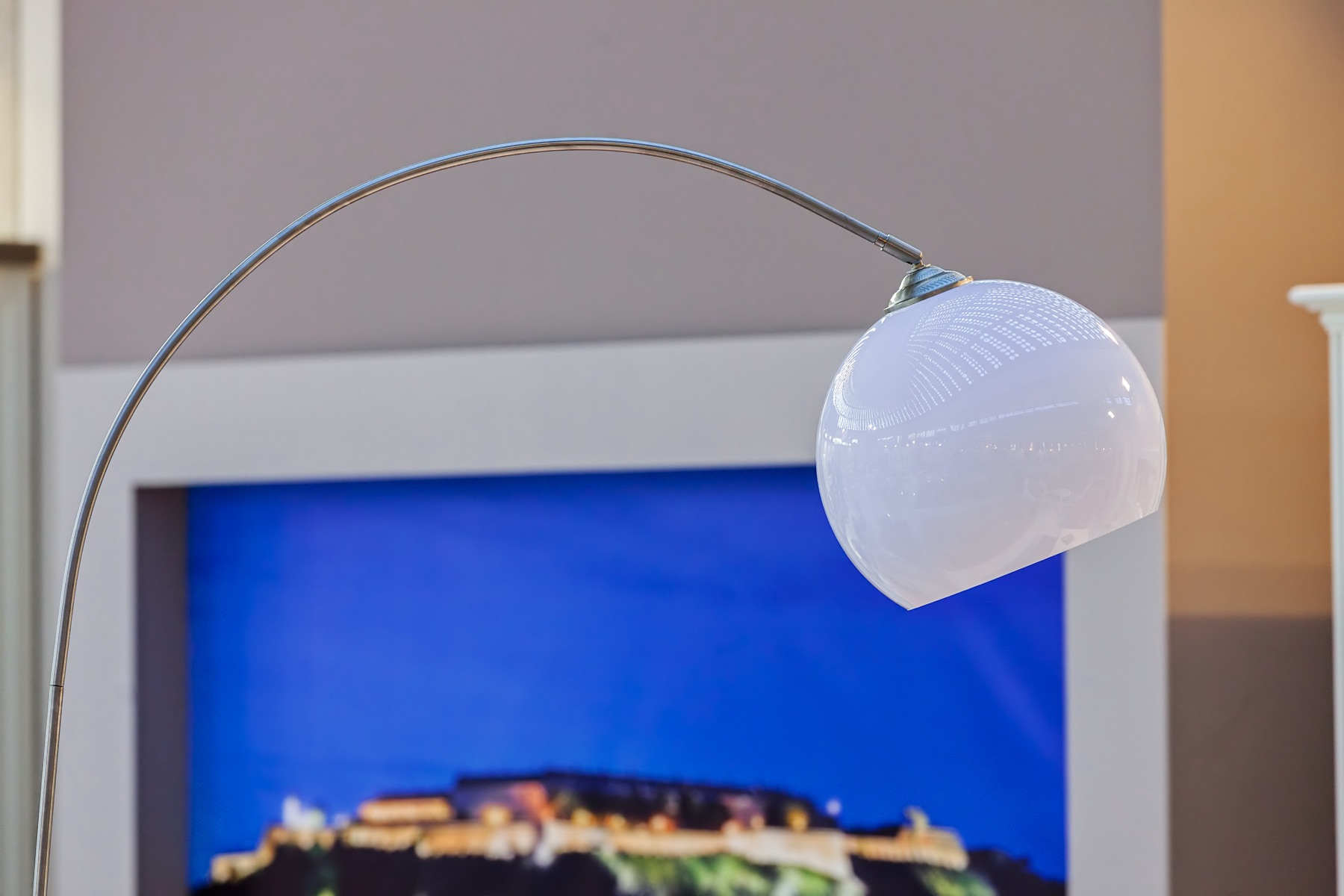
Sears, Roebuck & Co. v. Stiffel Co., 376 U.S. 225 (1964), No. 108, is the source code of American intellectual-property federalism — the decision that fixed, for the modern era, who gets to control the copying of a product and on what terms. Argued January 16, 1964, and decided March 9, 1964, in a unanimous opinion by Justice Black, the case held that a state’s unfair-competition law cannot forbid the copying of an article that is neither patented nor copyrighted. Decided the same day as its companion, Compco Corp. v. Day-Brite Lighting, Inc., 376 U.S. 234 (1964), it remains the doctrinal foundation on which every later preemption case — including Bonito Boats — is built, and the reason secrecy, not state anti-copying law, is the backbone of non-patent protection strategy.
The facts are humble and instructive. Stiffel developed a “pole lamp,” a vertical tube fitted with lamp heads that stands by tension between a room’s floor and ceiling. It was a commercial hit. Stiffel obtained both a design and a mechanical patent and, when Sears brought out a substantially identical lamp at a lower price, sued for patent infringement and for unfair competition under Illinois law, alleging that the look-alike caused confusion as to source. The U.S. District Court for the Northern District of Illinois held both patents invalid for “want of invention” but found Sears liable for unfair competition because the lamps were “confusingly similar.” The Seventh Circuit affirmed. The Supreme Court reversed the unfair-competition holding.
At a glance
- Case: Sears, Roebuck & Co. v. Stiffel Co., 376 U.S. 225 (1964)
- Docket: No. 108
- Argued / decided: January 16, 1964 / March 9, 1964
- Court: Supreme Court of the United States (Black, J., for a unanimous Court)
- Companion case: Compco Corp. v. Day-Brite Lighting, Inc., 376 U.S. 234 (1964), decided the same day
- Below: Seventh Circuit, affirming the N.D. Ill. (patents invalid for want of invention; Sears liable for unfair competition)
- Core holding: A state may not, under unfair-competition law, prohibit the copying of an unpatented, uncopyrighted article or award damages for such copying.
- Why it matters: It establishes that exclusivity in a product’s design flows only from the federal patent (or copyright) bargain; states cannot supply a parallel monopoly.
The constitutional logic: copying as the default
Justice Black grounded the decision in the structure of the Constitution itself. The power to grant patents and copyrights is a federal power, exercised through a federal balance: a limited term of exclusivity in exchange for disclosure and a genuine contribution to the art. The necessary corollary, the Court reasoned, is that whatever fails to earn that federal monopoly belongs to the public. Once Stiffel’s patents were adjudged invalid, the pole-lamp design was, as a matter of federal law, in the public domain — and “an article on which the patent has expired, like an unpatented article, is in the public domain and may be made and sold by whoever chooses to do so.”
From that premise the conclusion followed directly. To let Illinois forbid copying of the very design federal law had declared free would let the state hand out, under another name, the exclusivity the patent system had withheld. A state, the Court held, may not prohibit the copying of an unpatented article or award damages for copying it; to do so would clash with the federal objective of leaving unpatented innovations open to all. The right to copy what is not patented is not a loophole. It is the affirmative federal policy that keeps the patent monopoly the exception rather than the rule.
Confusion, labeling, and the line the Court did leave open
Sears is sometimes misread as abolishing state unfair-competition law wholesale. It did not. The Court drew a careful distinction between forbidding the copying of a design — impermissible — and requiring honest labeling to prevent consumers from being deceived about who made a product — permissible. A state may still require a copyist to identify the true source of its goods, and may police passing off, false designation, and deception as to origin. What it may not do is convert a generalized risk of confusion that arises merely because two products look alike into a prohibition on the look-alike itself.
That distinction is the seed of modern trade-dress law and its limits. Source-identifying features that are non-functional and have acquired secondary meaning can be protected against confusion; the functional or aesthetic design as such cannot be monopolized through state law once it is unpatented and public. The companion Compco decision made the same point with a different fixture — a cross-ribbed fluorescent reflector whose design patent likewise failed — and reinforced that the protection states may offer runs to deception, not to the design.
The strategic lesson: exclusivity comes from the bargain or from secrecy
Read as a strategy case, Sears delivers a stark instruction to anyone deciding how to protect a product. There are exactly two durable ways to keep competitors from making the same thing: earn a valid federal patent (or copyright/design right), or never disclose how it is made. State unfair-competition law is not a third path; it cannot resurrect exclusivity over a design the inventor has both publicly sold and failed to patent.
This is why Sears and Compco are the natural counterweight to the trade-secret line of cases. Trade-secret protection survives federal preemption — as Kewanee Oil Co. v. Bicron Corp., 416 U.S. 470 (1974), later confirmed — precisely because it depends on secrecy and tolerates the copying Sears protects: reverse engineering and independent invention remain lawful. The moment an innovation is disclosed through sale without patent coverage, Sears governs and the design is free. The choice between patenting and keeping a secret is therefore not merely a cost-benefit calculation about disclosure; it is, after Sears, the choice between the only two regimes that can actually deliver exclusivity. Betting on state law to fill the gap is no strategy at all.
Open questions
The most enduring uncertainty Sears spawned is the boundary of its own preemptive force. Later decisions narrowed early, expansive readings of the case: Goldstein v. California, 412 U.S. 546 (1973), upheld state protection of sound recordings Congress had left unaddressed, and Kewanee preserved trade-secret law — both signaling that Sears preempts state efforts to monopolize patentable subject matter in the public domain, not every state regulation touching intellectual property. Where exactly consumer-protection rationales (labeling, anti-deception) end and impermissible design monopoly begins remains litigated, most visibly in trade-dress functionality cases such as TrafFix Devices, Inc. v. Marketing Displays, Inc., 532 U.S. 23 (2001). And the case does not resolve how its logic applies to wholly federal sui generis design regimes Congress later enacted.
Implications
- Copying an unpatented, uncopyrighted article is a federal right. No state unfair-competition theory can prohibit it or award damages for it.
- An invalid patent is worse than none for anti-copying purposes. Once the patent falls, the design enters the public domain and becomes freely copyable.
- States may police deception, not similarity. Honest-labeling and source-identification requirements survive; bans on look-alikes do not.
- Exclusivity has two real sources. A valid federal grant or genuine secrecy — there is no enforceable state-law third option for a publicly sold, unpatented design.
- Trade-secret strategy depends on this default. Secrecy works because the law otherwise permits copying; disclose without a patent and Sears makes the design fair game.
Frequently asked questions
Why could Sears legally copy Stiffel’s successful lamp? Because the trial court held Stiffel’s patents invalid for want of invention. With no valid patent, the design was in the public domain, and federal policy gives the public the right to copy unpatented articles. Illinois could not override that with its unfair-competition law.
Does this mean state unfair-competition law is dead? No. Sears preserved the states’ power to require truthful labeling and to prevent passing off or deception about a product’s source. What states cannot do is prohibit the copying of an unpatented design merely because the copy looks like the original.
How does Sears relate to trade-secret protection? They are complementary. Trade-secret law (later upheld in Kewanee) protects only secret information and permits reverse engineering and independent invention — the same copying Sears protects. Once a design is publicly sold without a patent, Sears controls and copying is lawful; secrecy is the alternative that keeps competitors out.
Authorities and sources
- Sears, Roebuck & Co. v. Stiffel Co., 376 U.S. 225 (1964), opinion (Cornell LII) — https://www.law.cornell.edu/supremecourt/text/376/225
- Compco Corp. v. Day-Brite Lighting, Inc., 376 U.S. 234 (1964), opinion (Cornell LII) — https://www.law.cornell.edu/supremecourt/text/376/234
- Sears, Roebuck & Co. v. Stiffel Co. — Wikipedia overview — https://en.wikipedia.org/wiki/Sears,_Roebuck_%26_Co._v._Stiffel_Co.
- Compco Corp. v. Day-Brite Lighting, Inc. — Wikipedia overview — https://en.wikipedia.org/wiki/Compco_Corp._v._Day-Brite_Lighting,_Inc.
- Goldstein v. California, 412 U.S. 546 (1973) (Cornell LII) — https://www.law.cornell.edu/supremecourt/text/412/546
- Kewanee Oil Co. v. Bicron Corp., 416 U.S. 470 (1974) (Cornell LII) — https://www.law.cornell.edu/supremecourt/text/416/470