
Designs on a Uniform: Star Athletica and the New Test for Separability
In Star Athletica v. Varsity Brands (2017), the Supreme Court replaced a tangle of separability tests with a single statutory inquiry, holding that surface decorations on cheerleading uniforms can be copyrighted as pictorial works.
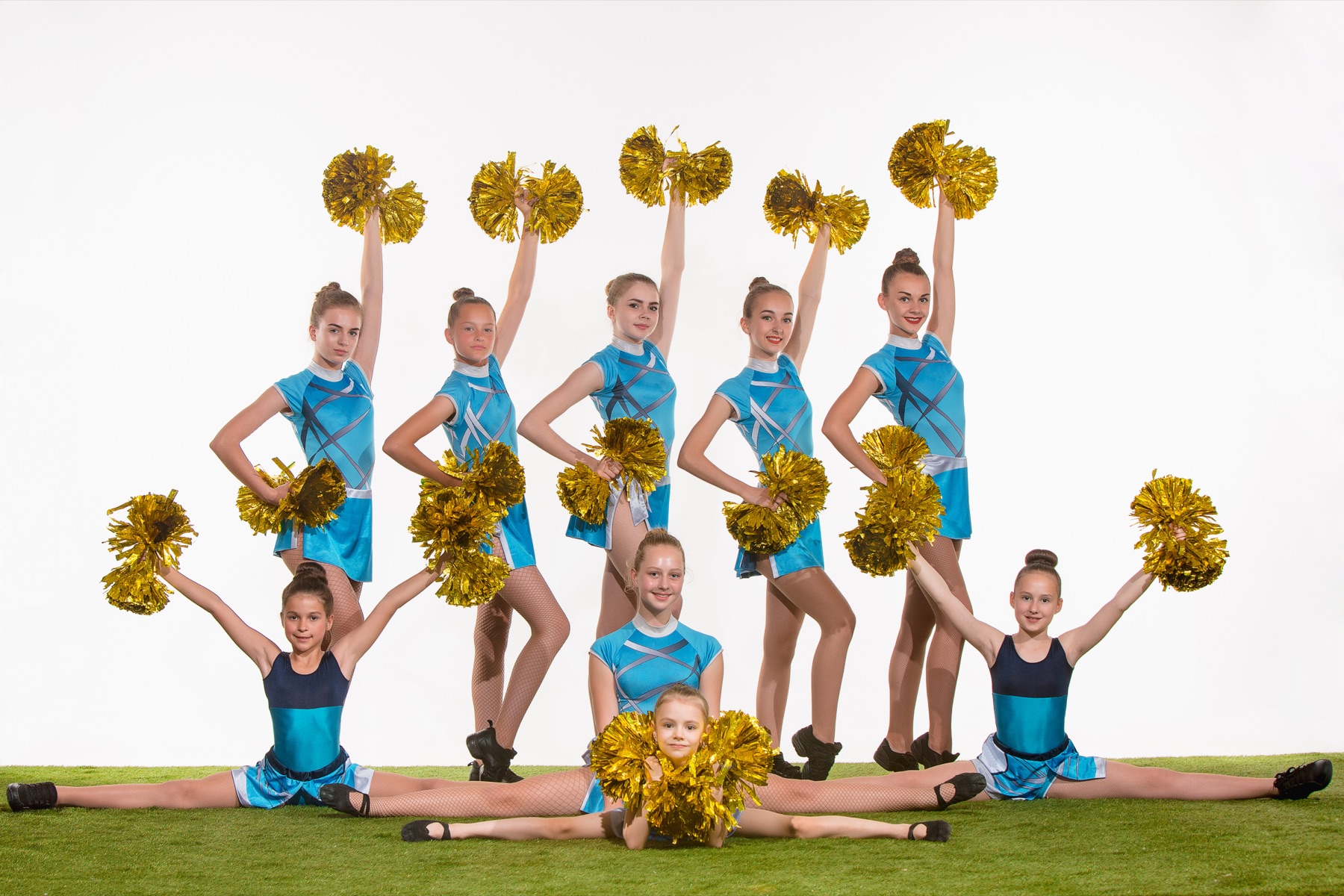
In Star Athletica, L.L.C. v. Varsity Brands, Inc., 580 U.S. 405 (2017), No. 15-866 (argued Oct. 31, 2016; decided Mar. 22, 2017), the Supreme Court of the United States confronted one of copyright law’s most notoriously muddled doctrines: when the design of a “useful article” — a garment, a lamp, a chair — contains pictorial or sculptural features that may themselves be protected. Justice Clarence Thomas, writing for the Court, announced a single, text-driven “separability” test to displace the roughly ten competing approaches the lower courts and commentators had spawned. Applying it, the Court held that the arrangements of lines, chevrons, stripes, and colored shapes on Varsity Brands’ cheerleading uniforms were separable, copyrightable pictorial works. Justice Ruth Bader Ginsburg concurred in the judgment on a different theory; Justice Stephen Breyer, joined by Justice Anthony Kennedy, dissented.
At a glance
- Case: Star Athletica, L.L.C. v. Varsity Brands, Inc., 580 U.S. 405 (2017), No. 15-866
- Court: Supreme Court of the United States (on certiorari to the U.S. Court of Appeals for the Sixth Circuit)
- Argued / Decided: October 31, 2016 / March 22, 2017
- Author: Justice Thomas (majority); Justice Ginsburg concurring in the judgment; Justice Breyer dissenting, joined by Justice Kennedy
- Holding: A feature incorporated into the design of a useful article is eligible for copyright protection if it (1) can be perceived as a two- or three-dimensional work of art separate from the useful article, and (2) would qualify as a protectable pictorial, graphic, or sculptural work — on its own or fixed in another medium — if imagined separately from the article. The surface designs on Varsity’s uniforms satisfied that test.
The statutory puzzle and the decision below
Copyright does not protect useful articles as such. The 1976 Act extends protection to “pictorial, graphic, and sculptural works,” but defines those to include the design of a useful article “only if, and only to the extent that, such design incorporates pictorial, graphic, or sculptural features that can be identified separately from, and are capable of existing independently of, the utilitarian aspects of the article.” 17 U.S.C. § 101. That definition — the “separability” requirement — had generated chaos. Courts variously distinguished “physical” from “conceptual” separability, asked whether the design reflected the artist’s unconstrained aesthetic judgment, inquired whether the article would still be marketable without the feature, or probed the designer’s intent. The results were inconsistent and, in the lower courts’ own words, a “mess.”
Varsity Brands, a dominant maker of cheerleading apparel, holds copyright registrations covering two-dimensional designs — combinations of chevrons, lines, curves, and colored shapes — appearing on the surface of its uniforms. When Star Athletica marketed competing uniforms bearing similar designs, Varsity sued. The district court sided with Star Athletica, reasoning that the designs were not separable because they served the function of identifying the garments as cheerleading uniforms. The Sixth Circuit reversed, holding the graphic features separable and copyrightable. The Supreme Court granted certiorari expressly to resolve the “widespread disagreement” over the proper separability test.
Reasoning: a unitary test grounded in statutory text
Justice Thomas’s opinion is methodologically austere — it purports to do nothing more than read § 101. The whole inquiry, he wrote, is “whether the feature for which copyright protection is claimed would have been eligible for copyright protection as a pictorial, graphic, or sculptural work had it originally been fixed in some tangible medium other than a useful article before being applied to a useful article.” That collapses into the two-step formulation the Court adopted: separate identification and independent existence.
The first step — separate identification — is “not onerous.” The decisionmaker need only be able to look at the useful article and “spot some two- or three-dimensional element that appears to have pictorial, graphic, or sculptural qualities.” The second step is the analytically harder one: the feature, imagined apart from the article, must be capable of existing as its own protectable pictorial, graphic, or sculptural work. Crucially, the feature need not be able to stand alone as a useful article once removed; the statute asks whether the artistic feature could exist independently, not whether the remainder of the object would still function. If imagining away the decoration would necessarily replicate the useful article itself, the feature is inseparable; but a surface design transferred onto a canvas plainly survives as art, and that suffices.
Applying the test, the Court found Varsity’s designs separable. One can identify the chevrons and colored shapes as features with pictorial qualities, and one can imagine those same designs applied to another medium — say, painted on a canvas — where they would qualify as two-dimensional works of art. That the designs, once extracted, would take the outline of a uniform did not matter; a two-dimensional artwork “is necessarily a faithful representation of the art” affixed to whatever surface carried it.
What the Court rejected — and what it left standing
Justice Thomas was as notable for what he discarded as for what he adopted. The Court rejected the long-influential distinction between “physical” and “conceptual” separability as ungrounded in the statute. It rejected any requirement that the design be “solely artistic” — that the feature reflect aesthetic choices uninfluenced by function. And it rejected the “marketability” or “marketing” approach, under which a feature counts as separable only if the useful article would remain equally salable without it. Nothing in § 101, the Court held, conditions copyright on a feature’s commercial dispensability.
The Court was equally careful about the limits of its holding. Copyright in a separable surface design protects only the two-dimensional artwork itself, not the cut, shape, or fit of the uniform; a competitor remains free to manufacture identical garments bearing different decorations. The decision speaks to eligibility, not to ownership, originality, or infringement, all of which remained for remand. And because the designs here were two-dimensional surface decorations, the Court did not deeply test how its framework would handle three-dimensional industrial designs where art and utility are more thoroughly fused.
The fractured rationales underscore the difficulty. Justice Ginsburg would have skipped separability entirely, reasoning that the designs were standalone pictorial works reproduced on useful articles rather than designs of useful articles — so no separability analysis was needed. Justice Breyer, joined by Justice Kennedy, dissented: in his view, one cannot imagine Varsity’s designs apart from the uniforms without, in effect, picturing the uniforms themselves, so the features were not truly separable.
Open questions
- Three-dimensional designs: The test is cleanest for surface graphics. Its application to sculptural product designs — furniture, lighting, industrial forms — where shape and function intertwine remains contested.
- How thin is the resulting copyright? By protecting only the extracted artwork, Star Athletica may grant rights that competitors can easily design around, raising the question of how much real-world protection fashion and product designers actually gain.
- Originality after eligibility: The Court expressly declined to decide whether Varsity’s designs are sufficiently original under Feist. Eligibility under § 101 and originality under § 102 remain distinct hurdles.
- The fashion-design gap: By keeping garment shape and fit unprotectable, the decision leaves the United States without comprehensive design protection of the kind found abroad, perpetuating the debate over a sui generis fashion-design right.
Implications
- For apparel and product designers: Surface graphics, patterns, and applied ornamentation on useful articles are copyrightable if they can be imagined as standalone art — a meaningful, if narrow, avenue of protection.
- For competitors and fast-fashion firms: Copying the cut and function of a garment remains lawful; the legal risk lies in reproducing protectable surface designs. Clearance now turns on separating decoration from utility.
- For litigators: The separability inquiry is simpler but front-loads a hypothetical — imagine the feature in another medium — and defers originality and infringement to later stages.
- For doctrine: Star Athletica unified a fractured area around statutory text, but its abstraction guarantees continued litigation over three-dimensional and function-fused designs.
Frequently asked questions
Did Star Athletica make clothing designs copyrightable? Only in part. It made separable surface designs — the graphics applied to a garment — eligible for copyright. The garment’s shape, cut, and function remain unprotectable useful-article features.
What is the two-part test? A design feature on a useful article is eligible for copyright if it (1) can be perceived as a two- or three-dimensional work of art separate from the article, and (2) would qualify as a protectable pictorial, graphic, or sculptural work if imagined apart from the article. Both steps must be met.
Did the Court decide whether Varsity’s designs were original or infringed? No. The Court resolved only eligibility under § 101. Whether the designs satisfy Feist’s originality threshold and whether Star Athletica infringed were left for further proceedings.