
The Boot That Could Not Become a Brand: TBL Licensing v. Vidal and the Limits of Product-Configuration Trade Dress
The Fourth Circuit refused to register the configuration of Timberland's iconic tan work boot, holding that Timberland's evidence proved the fame of the whole boot but not acquired distinctiveness in the discrete features it claimed.
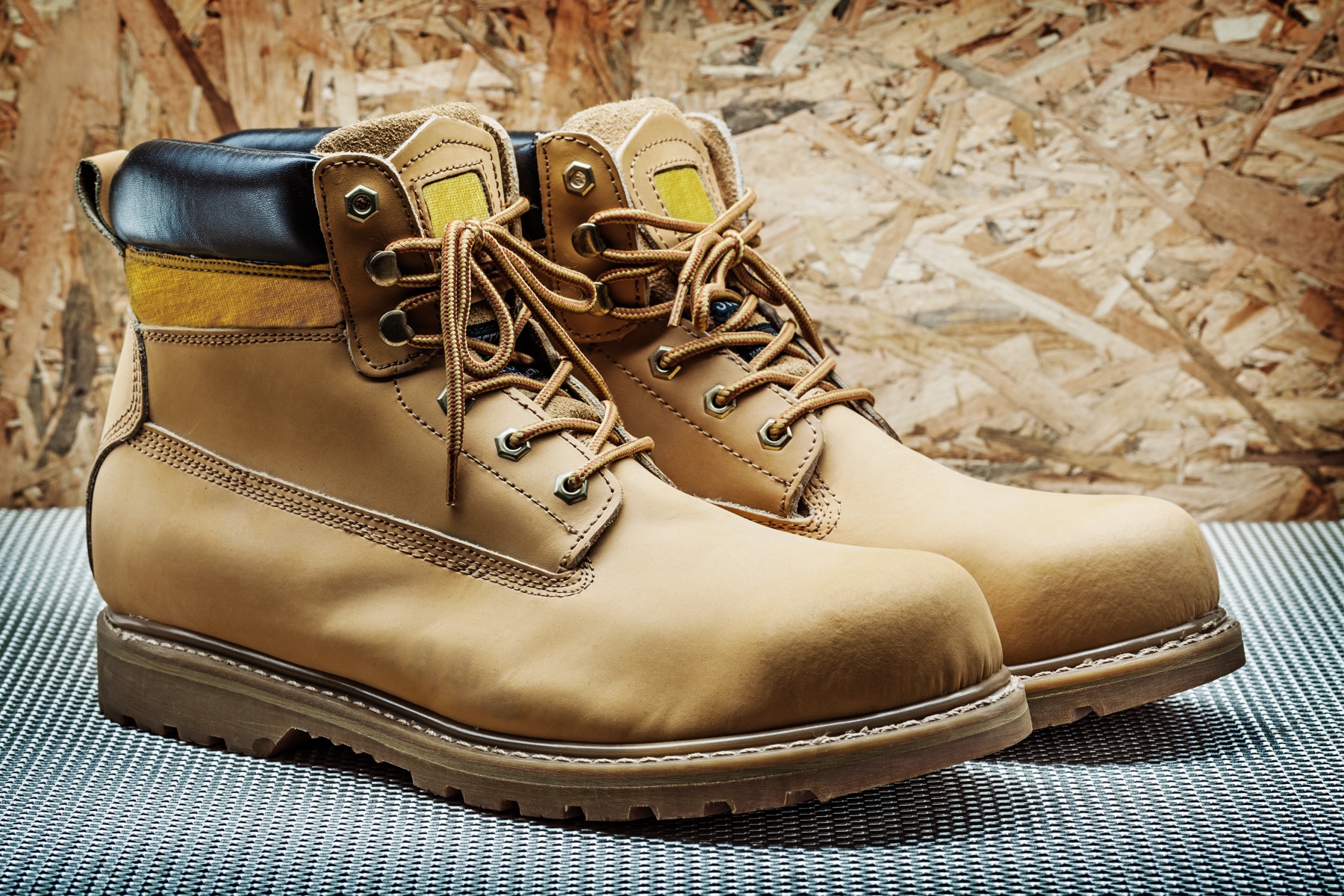
Few products are as instantly recognizable as Timberland’s tan work boot. That recognition was, paradoxically, the company’s undoing. In TBL Licensing, LLC v. Vidal, 98 F.4th 500 (4th Cir. 2024) (No. 23-1150, decided April 15, 2024), a unanimous panel of the U.S. Court of Appeals for the Fourth Circuit affirmed the denial of trade dress registration for the configuration of Timberland’s boot, holding that the company had failed to prove acquired distinctiveness in the specific design features it sought to claim. Judge Quattlebaum wrote for a panel that also included Chief Judge Gregory and Judge Benjamin. The decision is a careful, and at times unforgiving, application of the rule that product-design trade dress lives or dies on secondary meaning—and it offers a cautionary lesson about the gap between a famous product and a registrable mark.
At a glance
- Case: TBL Licensing, LLC v. Vidal, 98 F.4th 500 (4th Cir. 2024); No. 23-1150 (decided Apr. 15, 2024).
- Court: U.S. Court of Appeals for the Fourth Circuit; Judge Quattlebaum writing, joined by Chief Judge Gregory and Judge Benjamin (unanimous).
- Posture: Civil action under 15 U.S.C. § 1071(b) in the Eastern District of Virginia, seeking de novo review of the Trademark Trial and Appeal Board’s refusal to register Application Serial No. 86/634,819.
- Holding: The applied-for product-configuration trade dress lacked acquired distinctiveness; Timberland’s evidence established the renown of its overall boot, not source significance in the discrete features it claimed. The court declined to resolve functionality.
- Status: Judgment of the district court affirmed; registration refused.
Procedural posture: a Section 1071(b) action, not a record review
The path of this dispute matters because it shaped the evidence the courts considered. Timberland applied to register a three-dimensional configuration of its lace-up boot, claiming an overall silhouette with a visibly bulbous toe box together with a handful of individual features: a tube-shaped ankle collar, two-tone outsoles divided horizontally and extending around the boot’s circumference, an hourglass-shaped rear heel panel, quad-stitching in an inverted “U” shape, and hexagonal eyelets. The examining attorney refused registration, and the TTAB affirmed, on functionality and lack of distinctiveness grounds.
Rather than appeal the Board’s decision directly to the Federal Circuit on the administrative record, Timberland chose the alternative route Congress provides in 15 U.S.C. § 1071(b): a civil action in district court. That election carries a strategic trade-off. It permits “additional development of the record and de novo review,” allowing an applicant to introduce evidence the Board never saw—but it also exposes the applicant to a fresh, plenary determination unconstrained by deference to the agency. Timberland built a substantial record on the new track. The Eastern District of Virginia nonetheless held the configuration both functional and lacking in acquired distinctiveness, and the Fourth Circuit affirmed on the second ground.
Why product configuration always needs secondary meaning
The doctrinal frame is set by two Supreme Court decisions that the Fourth Circuit treated as controlling. In Wal-Mart Stores, Inc. v. Samara Brothers, Inc., 529 U.S. 205 (2000), the Court drew a categorical line between two kinds of trade dress. Product-packaging trade dress—the wrapper, the label, the box—can be inherently distinctive and thus protectable without proof that consumers have come to associate it with a source. Product-design (or product-configuration) trade dress cannot. Because consumers are predisposed to view a product’s shape as serving a functional or aesthetic purpose rather than as a source identifier, the Court held that product design “is distinctive, and therefore protectible, only upon a showing of secondary meaning.” When in doubt about which category a claimed trade dress occupies, Wal-Mart instructs courts to treat it as product design and demand secondary meaning.
A boot’s shape is the paradigm of product design. So Timberland faced the heavier burden from the outset: it had to prove that, in the minds of consumers, the claimed features had come to signify Timberland specifically—“the primary significance” of the design “in the minds of the consuming public is not the product but the producer,” to borrow the classic formulation. That is a demanding standard for any configuration, and the Fourth Circuit’s analysis shows precisely where Timberland’s proof fell short.
The fame of the whole versus the meaning of the parts
The heart of the opinion is a distinction between the boot as a cultural object and the particular features Timberland claimed. Timberland marshaled the kind of evidence that usually impresses—decades of sales, enormous advertising expenditures, unsolicited media coverage, and instances of competitor copying. But the court found that this evidence proved the wrong thing. It demonstrated consumer recognition of the entire boot, including numerous elements Timberland had not claimed, rather than source significance attaching to the discrete subset of features in the application.
That mismatch was fatal. Secondary meaning must be shown for the trade dress as claimed. Advertising that features the whole boot, sales of the whole boot, and press about the whole boot do not establish that consumers identify Timberland from, say, the hexagonal eyelets or the hourglass heel panel in isolation. The court also pointed to market saturation: the record showed many similar-looking boots from other makers, which undercut any inference that the claimed features were uniquely associated with a single source. A design feature cannot acquire distinctiveness as a source identifier when the marketplace is full of competing products bearing the same or closely similar feature. The so-called “look-for” problem lurks here as well—advertising that trumpets a brand without directing consumers to look for the specific claimed features does little to convert those features into a mark.
The lesson is structural, not merely evidentiary. An applicant who claims a curated bundle of features carved out of a famous product must connect its secondary-meaning proof to that bundle. Timberland’s evidence celebrated the gestalt of the boot; the law required proof tied to the parts.
The functionality bar, left for another day
The district court had also held the configuration functional and therefore unregistrable regardless of distinctiveness. Functionality is the other great gatekeeper of product-design trade dress: under TrafFix Devices, Inc. v. Marketing Displays, Inc., 532 U.S. 23 (2001), a feature is functional—and so categorically excluded from trade dress protection—if it is essential to the use or purpose of the article or affects its cost or quality, and trademark law will not be used to extend a monopoly over useful product features that patent law leaves in the public domain. TrafFix also cautions that where a utility patent has claimed the feature, that patent is “strong evidence” of functionality.
The Fourth Circuit, however, declined to resolve functionality. It identified methodological concerns in how the district court had approached the question—including the need to evaluate the claimed design as a whole rather than feature by feature—but it did not have to untangle those issues, because the failure of secondary meaning independently doomed the application. By assuming without deciding that the configuration was not functional and affirming on distinctiveness, the panel resolved the case on the narrower ground and left the functionality analysis for a future case with a cleaner record. That restraint is notable: it means TBL Licensing is, for now, primarily a secondary-meaning precedent, and its functionality observations are dicta rather than holding.
Open questions
- How granular must secondary-meaning proof be? The opinion demands evidence tied to the claimed features, but it does not specify how an applicant should isolate consumer perception of a sub-set of a famous design—through targeted surveys, “look-for” advertising, or otherwise. The methodological burden remains unsettled.
- What is the right unit of analysis for functionality? The panel flagged the “as a whole” question without answering it. Future litigants are left to argue whether courts should aggregate features or scrutinize them individually—a choice that can be outcome-determinative.
- Does Section 1071(b) help or hurt configuration applicants? The de novo route let Timberland build a fuller record yet produced a fresh adverse judgment. Whether the added flexibility outweighs the loss of agency deference is a strategic question this case sharpens but does not resolve.
Implications
- Brand fame is not a substitute for feature-level secondary meaning. A celebrated product can still fail to register if the proof does not connect specific claimed features to a single source.
- Curate the claim carefully. Applicants should align the features they claim with the features their evidence—advertising, surveys, copying—actually isolates and promotes.
- Market saturation is a real obstacle. Widespread use of similar features by competitors will undercut acquired distinctiveness, and applicants should anticipate that evidentiary headwind.
- Functionality remains a live threat even when avoided. The panel sidestepped functionality this time, but the district court’s contrary finding signals the risk that configuration claims face on remand or in parallel litigation.
- “Look-for” advertising matters. Promotions that direct consumers to recognize the claimed features—not just the brand—are likely to carry disproportionate weight in future configuration cases.
Frequently asked questions
Did the Fourth Circuit hold that Timberland’s boot design is functional? No. The court declined to decide functionality. It noted concerns with the district court’s analysis and affirmed instead on the independent ground that the claimed configuration lacked acquired distinctiveness. The functionality discussion is therefore not a holding.
Why does a product’s shape require proof of secondary meaning when a logo does not? Under Wal-Mart v. Samara Brothers, product-design trade dress can never be inherently distinctive, because consumers tend to view a product’s shape as functional or aesthetic rather than as a source identifier. Product design is protectable only on a showing that consumers have come to associate the design with a particular source.
What should a company do differently to register a product configuration after this case? Tie the evidence to the specific features claimed. That means “look-for” advertising that highlights those features, consumer surveys testing recognition of the claimed elements rather than the whole product, and a record that distinguishes the applicant’s features from competing designs in a crowded market.
Authorities and sources
- TBL Licensing, LLC v. Vidal, No. 23-1150 (4th Cir. Apr. 15, 2024) (slip opinion), https://www.ca4.uscourts.gov/opinions/231150.P.pdf
- TBL Licensing, LLC v. Vidal, No. 23-1150 (4th Cir. 2024) (Justia), https://law.justia.com/cases/federal/appellate-courts/ca4/23-1150/23-1150-2024-04-15.html
- A&O Shearman, “Fourth Circuit Affirms Decision Denying Timberland Trade Dress Registration For Its Signature Boot,” https://www.lit-ip.aoshearman.com/fourth-circuit-affirms-decision-denying-timberland
- Wal-Mart Stores, Inc. v. Samara Bros., Inc., 529 U.S. 205 (2000), https://supreme.justia.com/cases/federal/us/529/205/
- TrafFix Devices, Inc. v. Marketing Displays, Inc., 532 U.S. 23 (2001), https://supreme.justia.com/cases/federal/us/532/23/
- 15 U.S.C. § 1071(b) (civil action electing de novo district-court review), https://www.law.cornell.edu/uscode/text/15/1071