
Honest Mistakes of Law Survive: Unicolors v. H&M and the Scienter Floor of § 411(b)
In Unicolors v. H&M (2022), the Supreme Court held that a copyright registration is not invalidated by an inaccuracy the applicant did not know was inaccurate — whether the error was one of fact or law.
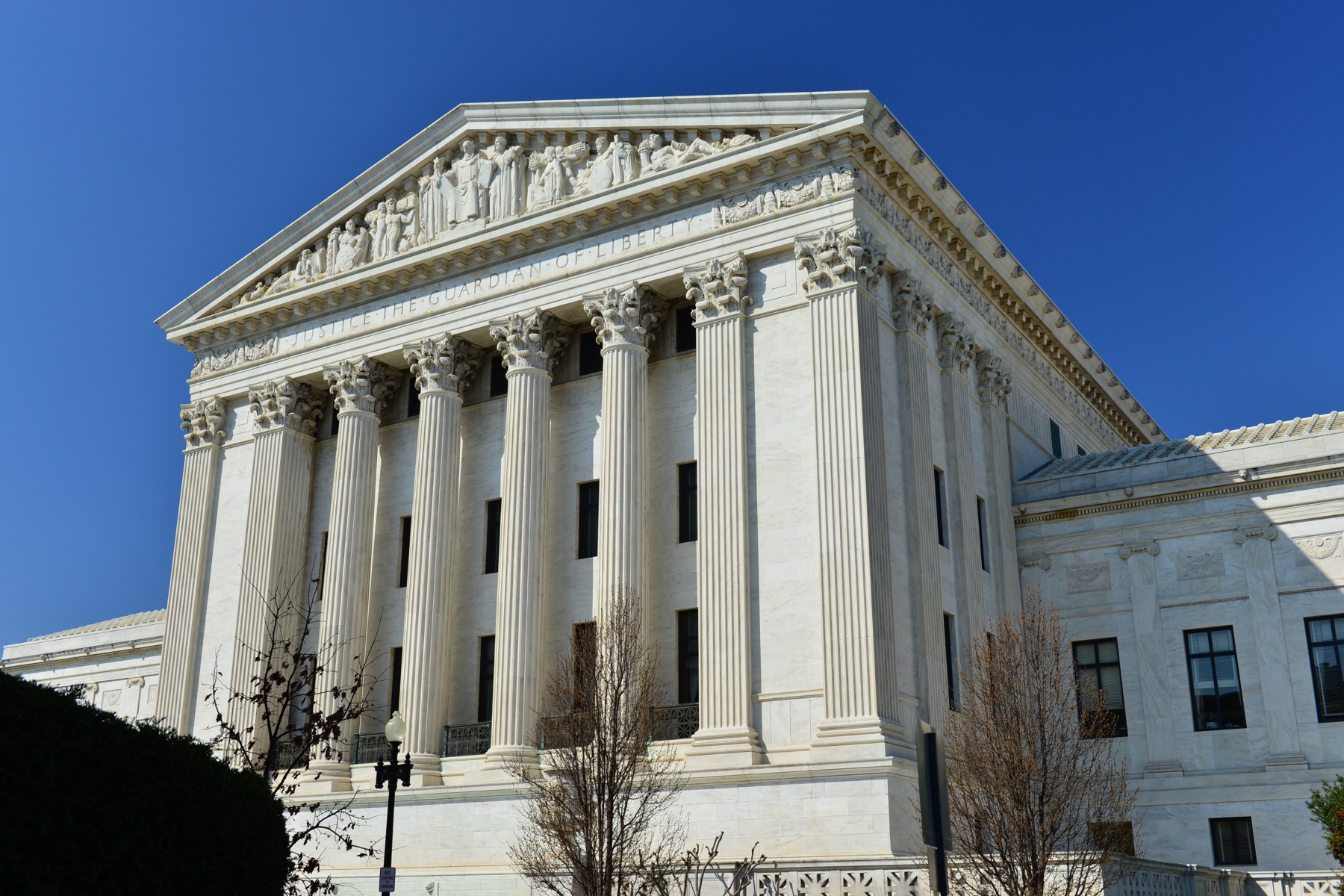
In Unicolors, Inc. v. H&M Hennes & Mauritz, L. P., No. 20-915 (U.S. Feb. 24, 2022), the Supreme Court of the United States held, 6–3, that a copyright registration is not rendered invalid under 17 U.S.C. § 411(b) merely because it contains an inaccuracy — even a material one — so long as the applicant lacked knowledge that the information was inaccurate, and that the requisite “knowledge” embraces mistakes of law as well as mistakes of fact. Justice Breyer delivered the opinion of the Court, joined by Chief Justice Roberts and Justices Sotomayor, Kagan, Kavanaugh, and Barrett. Justice Thomas filed a dissenting opinion, joined by Justice Alito, and joined by Justice Gorsuch except as to Part II. The Court vacated the judgment of the Court of Appeals for the Ninth Circuit and remanded.
At a glance
- Case: Unicolors, Inc. v. H&M Hennes & Mauritz, L. P., No. 20-915.
- Court / date: Supreme Court of the United States, decided February 24, 2022.
- Vote: 6–3. Majority by Breyer, J.; dissent by Thomas, J. (joined by Alito, J., and by Gorsuch, J., except as to Part II).
- Disposition: Ninth Circuit judgment vacated and remanded.
- Holding: Under § 411(b)(1)(A), “lack of either factual or legal knowledge” of an inaccuracy can excuse it; the statute “does not distinguish between a mistake of law and a mistake of fact.” A registration certificate therefore supports an infringement suit despite inaccurate information unless the applicant knew the information was inaccurate.
How a fabric design reached the Supreme Court
Unicolors owns copyrights in fabric designs. In 2011 it filed a single application that purported to register 31 separate designs at once. Under a Copyright Office regulation, a single application may cover multiple works only when those works were “included in the same unit of publication.” Unicolors had in fact made some of the 31 designs available exclusively to certain customers while offering others to the general public — a posture that, H&M later argued, meant the designs were not all published together as a single unit, rendering the single-application registration inaccurate.
After a jury found that H&M had infringed one of the designs, H&M renewed a motion for judgment as a matter of law. Its theory rested on § 411(b): because Unicolors had allegedly included inaccurate information — the assertion that all 31 works were part of one unit of publication — its registration was invalid, and an invalid registration cannot support an infringement suit. The District Court rejected the argument, reasoning that § 411(b) excuses inaccuracies unless the applicant knew they were inaccurate, and that Unicolors did not know it had violated the single-unit requirement. The Ninth Circuit reversed on that point. It held that it did not matter whether Unicolors was aware that it had failed the legal “single unit of publication” test; what mattered was that Unicolors knew the underlying facts — that it had marketed the designs differently. Knowledge of the facts, the Ninth Circuit concluded, was enough to forfeit § 411(b)‘s protection, even absent any awareness that those facts produced a legal defect.
The statutory architecture and the Court’s reading
Section 411(b) is a safe harbor born of a 2008 statute (the PRO-IP Act) designed to keep good-faith registrants out of trouble. It provides that a certificate of registration satisfies the registration requirement “regardless of whether the certificate contains any inaccurate information, unless — (A) the inaccurate information was included on the application for copyright registration with knowledge that it was inaccurate; and (B) the inaccuracy of the information, if known, would have caused the Register of Copyrights to refuse registration.” When those conditions are met, a court must, under § 411(b)(2), ask the Register whether the error would have mattered.
The narrow question was the meaning of “knowledge that it was inaccurate.” Justice Breyer’s majority gave it a plain, capacious reading: knowledge means actual, subjective awareness that the information was inaccurate. Because an inaccuracy can arise from a misapprehension of law just as readily as from a misapprehension of fact, the Court refused to carve a mistake-of-law exception out of the statute. “Lack of either factual or legal knowledge on the part of Unicolors can excuse an inaccuracy in Unicolors’ copyright registration under § 411(b)(1)(A)‘s safe harbor.”
The majority marshaled several supports. Textually, neighboring and similarly structured provisions of the Copyright Act use “knowledge” to denote actual awareness, and nothing in § 411(b) signals that “inaccurate” information triggered by a legal misunderstanding should be treated differently from inaccurate facts. Contextually, the Court invoked the venerable distinction between innocent and willful conduct, observing that the safe harbor exists precisely to forgive the kind of honest error a non-lawyer registrant is likely to make. The old maxim that “ignorance of the law is no excuse” was, the Court explained, beside the point: that principle prevents a defendant from escaping liability for violating a known legal duty, not a rule that converts every good-faith legal mistake on a registration form into a fraud-like forfeiture. Historically, the majority noted that courts had long allowed inadvertent registration mistakes — including legal ones — to be excused, and that Congress enacted § 411(b) against that backdrop to limit, not expand, the technical defenses available to infringers.
The Court also offered defendants a meaningful response. Actual knowledge can be proved circumstantially, and “willful blindness may support a finding of actual knowledge.” An applicant who suspects the law cuts against its single-application strategy and deliberately avoids confirming the point cannot hide behind professed ignorance. The standard is subjective, but it is not naïve.
The dissent and the “different question” problem
Justice Thomas would have dismissed the writ as improvidently granted. In his view, the petition presented — and the Court agreed to decide — a different question from the one the parties ultimately briefed. The question on which certiorari was granted asked whether a court must have evidence of intent to defraud the Copyright Office before referring a § 411(b) inaccuracy to the Register; Unicolors, the dissent charged, then pivoted to the fact-versus-law issue the majority resolved. Part II of the dissent (which Justice Gorsuch declined to join) reached the merits and disagreed with the majority’s reading, but the through-line of Justice Thomas’s opinion was procedural: the Court, he argued, should not have answered a question that had not been cleanly preserved and presented. The majority addressed the objection directly, concluding that the fact/law question was fairly included within the broader question presented and adequately raised below.
Open questions
- Where is the line between innocent error and willful blindness? The majority endorsed willful blindness as a route to “actual knowledge,” but gave lower courts little guidance on what conduct — failing to consult counsel, ignoring a known ambiguity, reusing a flawed template — tips a careless applicant into a culpable one.
- What is the role of sophistication? A repeat institutional filer and a solo artist may face very different inferences about subjective awareness of the law. Courts will have to decide how much a registrant’s experience informs the knowledge inquiry.
- How readily must courts refer to the Register? Section 411(b)(2) requires courts to seek the Register’s view once the knowledge and materiality conditions are plausibly met. Unicolors does not resolve the threshold a challenger must clear to trigger that referral, an issue that continues to divide trial courts.
- Does the holding travel beyond the single-unit-of-publication context? The logic is general, but its application to other common registration errors — authorship, work-made-for-hire status, publication dates — will be worked out case by case.
Implications
- Registrations are harder to invalidate. A defendant can no longer defeat a suit simply by showing the certificate contains a legal mistake; it must show the applicant knew the entry was wrong. This raises the evidentiary bar for the § 411(b) defense considerably.
- Good-faith filers, especially pro se and small creators, are protected. The decision shields non-lawyer registrants from forfeiting rights over technical misunderstandings of a notoriously intricate registration regime.
- Willful blindness becomes the battleground. Expect discovery aimed at what an applicant knew or suspected about the law — internal communications, prior rejections, and the involvement (or avoidance) of counsel.
- Counseling shifts. Sophistication can cut against a registrant; documenting a genuine, reasonable basis for application choices is now a defensive asset, while papering over known doubts is a liability.
- The defense is narrowed, not eliminated. Deliberate or willfully blind misstatements still void the safe harbor, and the materiality prong and Register referral remain in play.
Frequently asked questions
Does Unicolors mean any mistake on a registration is harmless? No. An inaccuracy is excused only if the applicant did not actually know it was inaccurate. Knowing misstatements — and willful blindness to inaccuracy — still expose a registration to invalidation under § 411(b), and the error must also be one that would have caused the Register to refuse registration.
Did the Supreme Court decide that Unicolors’s registration was valid? No. The Court resolved only the legal standard — that mistakes of law, like mistakes of fact, can be excused — and vacated and remanded. Whether Unicolors actually knew its single-application filing was inaccurate was left for the lower courts to determine under the correct standard.
Who has the better of the willful-blindness point for litigants going forward? Both sides gain something. Plaintiffs benefit from a forgiving subjective-knowledge rule; defendants retain a path to invalidation by proving, often circumstantially, that the applicant was aware of or deliberately avoided learning the truth. The practical contest now centers on the registrant’s state of mind.
Authorities and sources
- Opinion of the Court (official slip opinion), Unicolors, Inc. v. H&M Hennes & Mauritz, L. P., No. 20-915 (U.S. Feb. 24, 2022)
- Legal Information Institute (Cornell Law School), case text and lineup
- SCOTUSblog case file (question presented, vote, dissent lineup)
- Copyright Alliance analysis of the decision
- Justia U.S. Supreme Court Center, case overview