
How Much Seed Can a Farmer Save? Asgrow Seed v. Winterboer and the Limits of the PVPA Crop Exemption
The Supreme Court read the Plant Variety Protection Act's farmer exemption narrowly, holding that a grower may sell saved seed only in the amount needed to replant his own acreage.
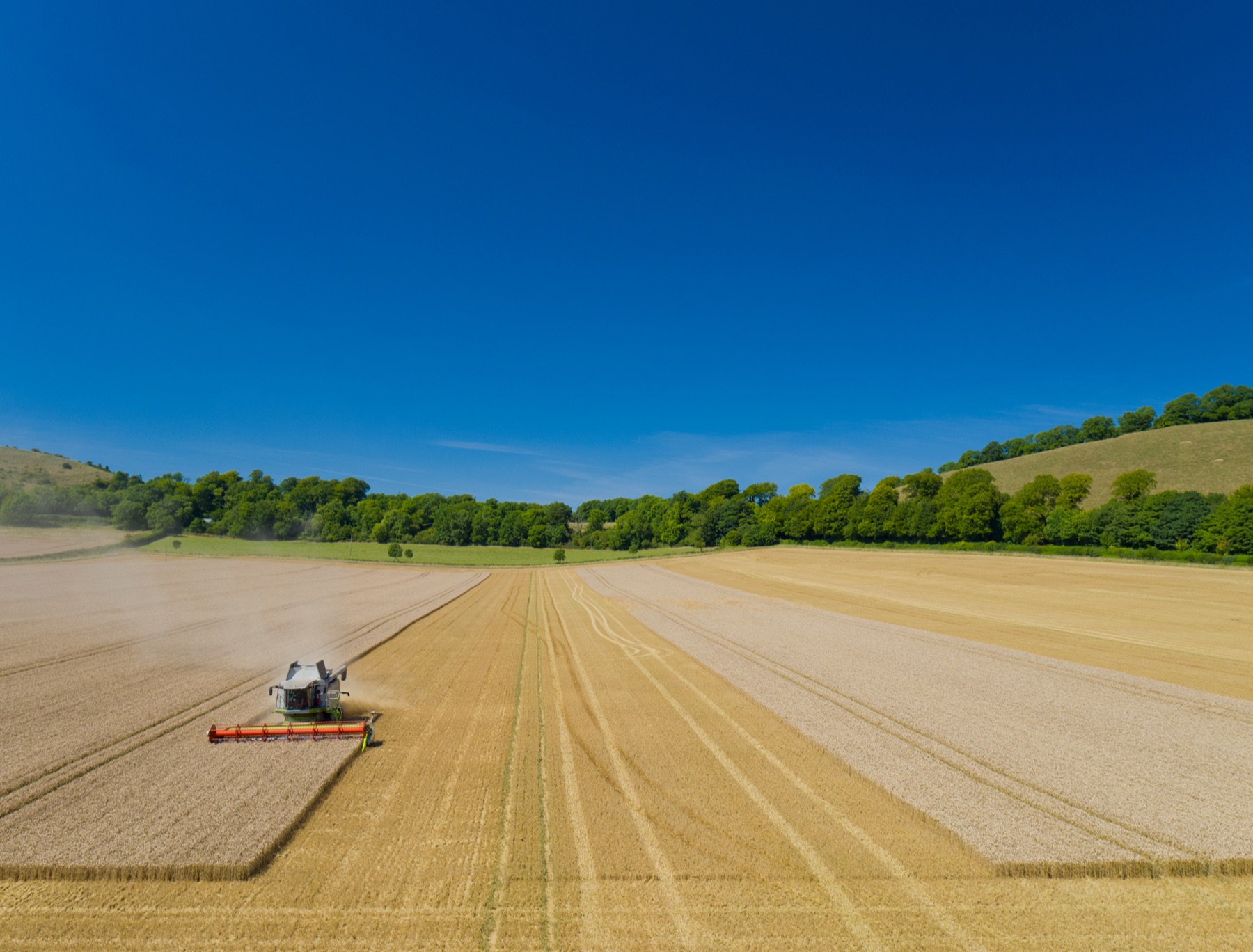
In Asgrow Seed Co. v. Winterboer, No. 92-2038, 513 U.S. 179 (1995), the Supreme Court of the United States, in an opinion by Justice Antonin Scalia decided January 18, 1995, construed one of the most consequential provisions in plant intellectual property: the farmer “crop exemption” of the Plant Variety Protection Act. The question was deceptively practical. A farmer who buys protected seed, plants it, and harvests far more than he needs — may he sell the surplus to neighbors for them to plant, or is he limited to selling no more than what he himself would have replanted? The Court chose the narrow reading, and in doing so curtailed the so-called “brown-bag” seed trade that had grown up around the exemption.
At a glance
- Case: Asgrow Seed Co. v. Winterboer, No. 92-2038, 513 U.S. 179 (1995)
- Court: Supreme Court of the United States (reversing the U.S. Court of Appeals for the Federal Circuit)
- Decided: January 18, 1995
- Opinion: Justice Scalia delivered the opinion of the Court
- Parties: Asgrow Seed Company, holder of PVPA certificates on two soybean varieties (A1937 and A2234), v. Denny and Becky Winterboer, Iowa farmers operating as “DeeBee’s”
- Statutes at issue: Plant Variety Protection Act, 7 U.S.C. § 2321 et seq., including the infringement provision (§ 2541) and the farmer crop exemption (§ 2543, as then in force)
- Conduct: The Winterboers planted 265 acres of protected soybean seed and sold nearly the entire resulting crop — roughly 10,529 bushels, enough to plant some 10,000 acres — to other farmers for use as seed
- Holding: A farmer who qualifies for the § 2543 exemption may sell for reproductive purposes only such saved seed as he set aside to replant his own acreage; large-scale resale grown for marketing is not exempt
A protection regime built for seed crops
The Plant Variety Protection Act of 1970 extends patent-like rights to developers of novel, distinct, uniform, and stable varieties of sexually reproduced and tuber-propagated plants — the category that the asexual-reproduction-focused Plant Patent Act does not reach. Administered by the U.S. Department of Agriculture rather than the PTO, a PVPA certificate gives its holder the right to exclude others from selling, offering, reproducing, importing, or exporting the protected variety, and from using it in producing a hybrid. Asgrow held certificates on two soybean lines, A1937 and A2234.
But Congress balanced those rights against the realities of farming with two key carve-outs. The research exemption permits use of a protected variety to develop new varieties. The farmer or “crop” exemption — the provision at the heart of Winterboer — addressed the age-old practice of saving seed from one harvest to plant the next. As then written, § 2543 allowed a farmer whose primary occupation is growing crops for sale (for other than reproductive purposes) to “save seed” and to “use such saved seed in the production of a crop,” and contained a proviso permitting certain sales of saved seed to other persons “for reproductive purposes.” The scope of that proviso was the whole case.
Two readings of the exemption
The Winterboers read the statute generously. On their view, the proviso authorized a farmer to sell saved seed to other farmers without any quantity ceiling tied to his own replanting needs — the Federal Circuit had held that § 2543 let a farmer sell up to half of every crop produced from protected seed, so long as the other half went to food or feed. Under that interpretation, a grower could plant a few hundred acres of certified seed, harvest thousands of bushels, and lawfully market the surplus to neighbors as planting stock, undercutting the certificate holder’s seed sales.
Asgrow read the exemption to authorize only modest, incidental seed-saving: a farmer could save and sell to others no more seed than he had set aside to replant his own fields. The District Court had agreed with that view; the Federal Circuit reversed; the Supreme Court took the case to resolve the split between the courts’ competing constructions of the exemption’s reach.
Why the narrow reading prevailed
Justice Scalia’s opinion turned on the statutory text and structure. The exemption’s core sentence permitted a farmer to “save seed” produced from the protected variety and to “use such saved seed in the production of a crop.” The phrase “such saved seed,” the Court reasoned, anchored the entire exemption — including the sales proviso — to seed that had been saved for the farmer’s own crop production. A farmer who plants protected seed with the predominant intent of producing more seed to sell is not “saving” seed in the statute’s sense; he is growing a seed crop for the market, the very activity the certificate holder is entitled to control.
The Court paid close attention to the requirement that the farmer’s primary farming occupation be growing crops “for sale for other than reproductive purposes” — that is, for food, feed, or fiber. A grower whose business model is to raise protected varieties expressly to sell as planting seed inverts that condition. Reading the proviso to permit unlimited resale, Scalia observed, would let the exemption swallow the statute, transforming a narrow accommodation for traditional seed-saving into a license for competing seed dealers to operate royalty-free. The Court therefore held that a qualifying farmer may sell, for reproductive purposes, “only such seed as he has saved for the purpose of replanting his own acreage.” Because the Winterboers had planted 265 acres and sold the resulting crop — enough to seed roughly ten thousand acres — they had vastly exceeded any plausible own-replanting allowance and could not claim the exemption.
A note on the statute’s later evolution
Winterboer construed the pre-1994 text of the exemption. In the 1994 amendments to the PVPA, Congress narrowed the farmer exemption further still, eliminating the right to sell saved seed to other farmers for reproductive purposes and confining the exemption largely to saving seed for use on the farmer’s own holdings. The decision and the amendment point in the same direction: the brown-bag seed trade, once a gray area, is now firmly outside the exemption. Winterboer remains the authoritative judicial reading of the saved-seed concept and a touchstone for interpreting the boundary between permissible on-farm seed-saving and infringing seed sales.
Open questions
- How is “saved for replanting his own acreage” measured? Winterboer sets the ceiling at the farmer’s own-replanting needs but leaves the proof of that quantity — acreage, seeding rates, intent — to be worked out case by case.
- How does the PVPA exemption interact with utility patents? After J.E.M. Ag Supply v. Pioneer Hi-Bred (2001), the same variety may be covered by a utility patent that has no saved-seed exemption at all, so a farmer’s PVPA rights may be irrelevant if a utility patent also reads on the seed.
- What counts as the farmer’s “primary farming occupation”? The exemption’s gatekeeping condition has seen little subsequent elaboration, leaving room for dispute where a grower straddles food production and seed dealing.
Implications
- The crop exemption is narrow. A farmer may save and sell PVPA-protected seed only up to the quantity needed to replant his own land; large-scale resale for planting is infringement under 7 U.S.C. § 2541.
- Brown-bagging is not a safe harbor. Marketing saved seed of a protected variety to other growers falls outside the exemption — a conclusion reinforced by the 1994 amendments.
- Intent and scale matter. Growing a protected variety predominantly to produce planting seed for sale is the controlled act, not exempt seed-saving.
- PVPA rights can be eclipsed by patents. Where a utility patent also covers the variety, the PVPA’s farmer-friendly exemptions provide no defense, a structural consequence of the parallel-protection regime.
- Certificate holders can enforce against secondary seed markets. Winterboer gives breeders a clear basis to pursue farmers who convert seed-saving into a competing seed business.
Frequently asked questions
What is the PVPA “crop” or farmer exemption? It is a provision of the Plant Variety Protection Act that historically let a farmer save seed from a protected variety for replanting and, within limits, sell some saved seed to other farmers. Winterboer held that any such sales are capped at the seed the farmer saved to replant his own acreage.
Did the Winterboers infringe? Yes. By planting 265 acres and selling nearly the entire harvest — enough to plant roughly 10,000 acres — to others as seed, they exceeded the narrow exemption and violated Asgrow’s PVPA rights under 7 U.S.C. § 2541.
Is the exemption still the same today? No. The 1994 amendments to the PVPA tightened the exemption, effectively ending the right to sell saved seed to other farmers for planting. Winterboer interpreted the earlier text but remains the leading authority on the meaning of farmer seed-saving.
Authorities and sources
- Supreme Court opinion, Asgrow Seed Co. v. Winterboer, 513 U.S. 179 (1995) (Cornell LII): https://www.law.cornell.edu/supct/html/92-2038.ZO.html
- Asgrow Seed Co. v. Winterboer (CourtListener): https://www.courtlistener.com/opinion/117888/asgrow-seed-co-v-winterboer/
- Plant Variety Protection Act, 7 U.S.C. § 2321 et seq. (Cornell LII): https://www.law.cornell.edu/uscode/text/7/2321
- PVPA infringement provision, 7 U.S.C. § 2541: https://www.law.cornell.edu/uscode/text/7/2541
- PVPA farmer/crop exemption, 7 U.S.C. § 2543: https://www.law.cornell.edu/uscode/text/7/2543
- USDA Plant Variety Protection Office overview: https://www.ams.usda.gov/services/plant-variety-protection