Planting Is Making: Bowman v. Monsanto and Patent Exhaustion for Self-Replicating Seeds
A unanimous Supreme Court held that patent exhaustion does not let a farmer grow successive generations of a patented seed, because planting and harvesting creates new copies rather than merely using a purchased one.
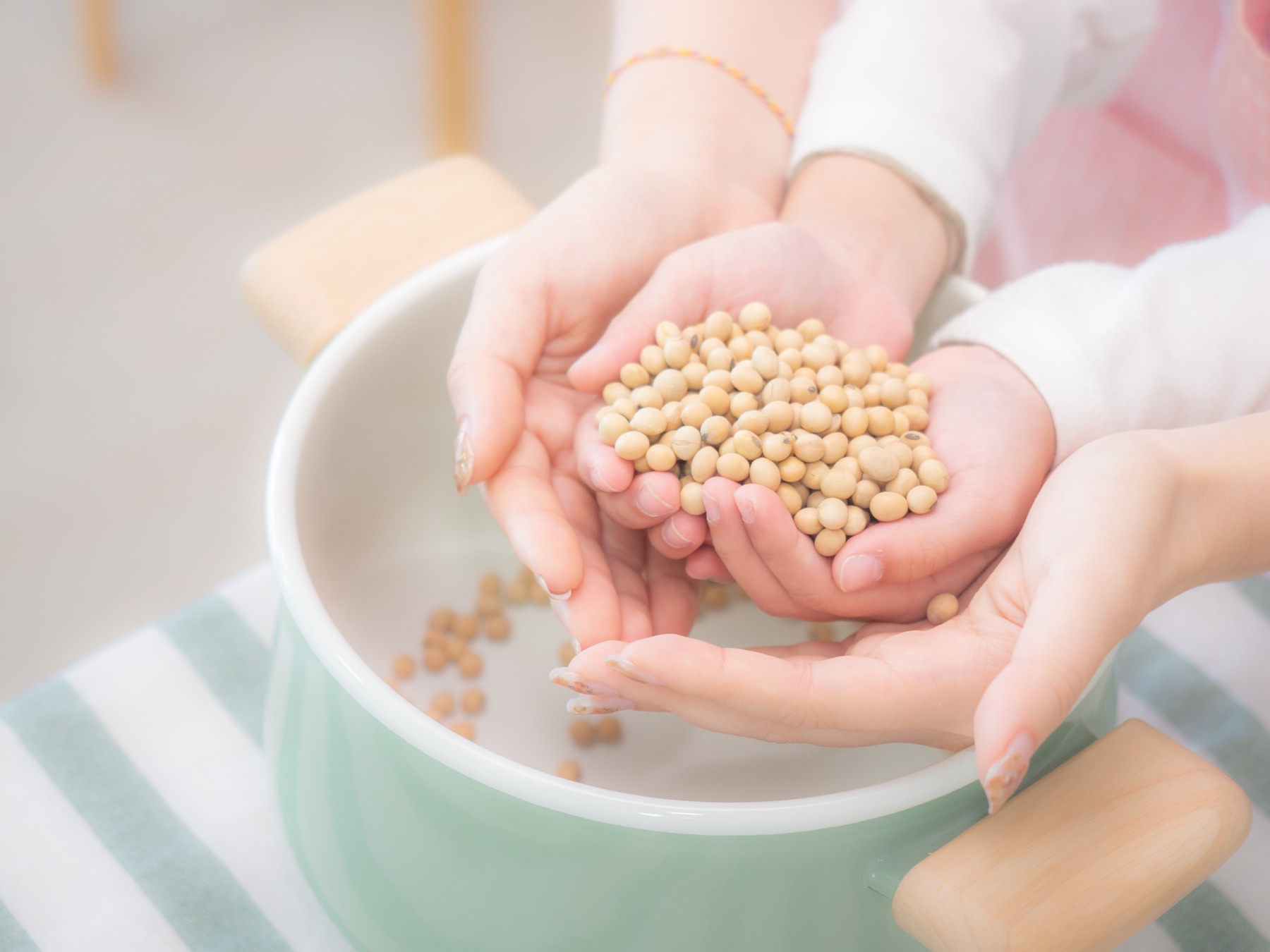
In Bowman v. Monsanto Co., No. 11-796, 569 U.S. 278 (2013), the Supreme Court of the United States confronted what makes plant patents genuinely difficult: the patented article reproduces itself. In a unanimous opinion by Justice Elena Kagan, argued February 19, 2013 and decided May 13, 2013, the Court held that the doctrine of patent exhaustion does not permit a farmer to plant and grow successive generations of a patented seed without the patent holder’s authorization. The buyer of a patented seed may use or resell that seed, but growing a new crop from it is “making” new copies of the invention — conduct the first sale never licensed. The decision affirmed the Federal Circuit and gave the seed industry the answer it had sought about how the oldest doctrine in patent law applies to a living, self-copying product.
At a glance
- Case: Bowman v. Monsanto Co., No. 11-796, 569 U.S. 278 (2013)
- Court: Supreme Court of the United States (affirming the U.S. Court of Appeals for the Federal Circuit)
- Argued / decided: February 19, 2013 / May 13, 2013
- Opinion: Justice Kagan, for a unanimous Court (9-0)
- Patents: U.S. Patent No. 5,352,605 and U.S. Patent No. RE39,247E, covering Monsanto’s glyphosate-resistant “Roundup Ready” soybean technology
- Conduct: Vernon Hugh Bowman, an Indiana farmer, bought commodity soybeans from a grain elevator for a late-season second crop, sprayed glyphosate to keep only the Roundup Ready survivors, harvested seed, and replanted it season after season
- Holding: Patent exhaustion does not permit a purchaser of a patented seed to make new copies by planting and harvesting; doing so is an infringing “making” of the invention
The exhaustion doctrine meets a living product
Patent exhaustion — the “first sale” rule — provides that an authorized sale of a patented article exhausts the patentee’s rights in that article. The buyer may use or resell the item she bought free of the patent. The doctrine is venerable and, for an ordinary machine or chemical, unremarkable: once you buy the patented widget, the patentee cannot use the patent to control your resale or use of it.
The trouble is that a seed is not a widget. Its entire economic value lies in its capacity to make more of itself. Monsanto sells Roundup Ready soybeans — engineered with a gene that lets the plant survive the herbicide glyphosate — under a technology agreement that permits a grower to plant the purchased seed for a single season and to sell or consume the resulting beans, but forbids saving any of the harvest for replanting. Bowman complied for his first crop each year. For his riskier second crop, however, he bought cheap commodity soybeans from a grain elevator — beans sold for consumption, most of which happened to carry the Roundup Ready trait because so many area farmers grew it — planted them, sprayed glyphosate to select for the resistant plants, and saved the resulting seed to replant in following seasons. He reasoned that exhaustion applied: these beans had been sold (by other farmers to the elevator, and by the elevator to him) in authorized transactions, so the patent rights in them were spent.
”Making” versus “using”: the line the Court drew
The Court agreed that exhaustion protected what Bowman did with the beans he bought — he could consume them, feed them, or resell them. What exhaustion did not protect was the new beans he grew. Justice Kagan framed the distinction in terms of the statutory rights at stake. Exhaustion permits the buyer to use and sell the purchased article; it does not authorize the buyer to make new copies of the patented invention. By planting and harvesting, Bowman manufactured eight additional generations of the patented seed. Those new seeds were never sold by Monsanto and so were never the subject of any exhausting first sale; making them infringed the patents under 35 U.S.C. § 271 as surely as if Bowman had built new patented machines from a purchased one.
The Court rejected the argument that the limitation be confined narrowly, but it also took care to cabin its own reasoning. Were exhaustion to allow replication, Kagan observed, a patent on a self-replicating product would be exhausted the instant the first seed was sold, because a single purchaser could produce and sell an unlimited supply — leaving the patent “a mere invitation to use it once.” That outcome would gut the incentive the patent is meant to provide for inventions, like engineered seeds, that are costly to develop but trivial to copy.
The “blame-the-bean” defense
Bowman’s most evocative argument was that the soybeans, not he, did the copying: it is the nature of a seed to germinate and multiply, so the “making” was the plant’s self-replication, not his volitional act. The Court was unpersuaded. Bowman was no “passive observer,” Kagan wrote; he selected, planted, sprayed, harvested, and saved the seed in a controlled, repeated effort to reproduce the patented trait. The self-replicating character of the product did not relieve him of responsibility for the deliberate process by which he exploited it. The Court expressly limited its holding to the facts before it, declining to announce a rule for every self-replicating technology — a hedge aimed at fields like software, cell lines, and other contexts where copies might arise as a necessary or incidental byproduct of an authorized use.
Open questions
- How far does the holding reach beyond seeds? The Court confined itself to Bowman’s facts and disclaimed a general rule for “every imaginable” self-replicating product, leaving the treatment of software, microorganisms, and biologics open.
- What about inadvertent or incidental replication? Bowman involved a farmer who deliberately selected and propagated the patented trait. The doctrine’s application to unintended self-replication — seeds blown onto a neighbor’s field, for instance — was not decided here.
- Does exhaustion ever permit a single “necessary” replication? Kagan acknowledged that in some settings copying may be “a necessary but incidental step” in using a product as intended; where that line falls remains undeveloped.
Implications
- Replanting patented seed infringes. Buying and saving the harvest of a patented seed for a new crop is “making” the invention and is not shielded by exhaustion, regardless of where the seed was purchased.
- The grain-elevator workaround fails. Acquiring commodity grain that happens to carry a patented trait does not launder the right to reproduce it; the source of the seed does not change the analysis.
- Self-replicating inventions retain enforceable value. The decision preserves the patent incentive for technologies that are expensive to invent but easy to copy by reproduction.
- Technology agreements are reinforced, not required. Even apart from Monsanto’s license terms, the patent statute itself bars unauthorized making of new seed generations.
- The holding is deliberately narrow. Practitioners in software, synthetic biology, and biologics cannot assume Bowman governs every self-replicating product; the Court left those questions for later cases.
Frequently asked questions
Why didn’t patent exhaustion protect Bowman? Exhaustion lets a buyer use or resell the specific patented article he purchased. It does not let him make new copies. By planting and harvesting, Bowman produced new generations of the patented seed that Monsanto never sold, so no first sale exhausted the patent as to those new seeds.
Does it matter that he bought the beans from a grain elevator rather than from Monsanto? No. The Court held that the source was irrelevant. Even though the elevator beans had been sold in authorized transactions, planting them to grow more patented seed was an unauthorized “making” of the invention.
Does Bowman mean every self-replicating product is treated this way? Not necessarily. The Court expressly limited its holding to the facts and declined to set a rule for all self-replicating technologies, noting that in some situations copying may be a necessary or incidental part of using a product.
Authorities and sources
- Supreme Court opinion, Bowman v. Monsanto Co., 569 U.S. 278 (2013) (Cornell LII): https://www.law.cornell.edu/supremecourt/text/11-796
- Slip opinion, Bowman v. Monsanto Co. (UNCTAD archive): https://unctad.org/ippcaselaw/sites/default/files/ippcaselaw/2020-12/Bowman%20v%20Monsanto%20US%20Supreme%20Court%202013.pdf
- WIPO Magazine, “Monsanto v. Bowman: Supreme Court upholds patent holders’ rights”: https://www.wipo.int/en/web/wipo-magazine/articles/in-the-courts-monsanto-v-bowman-supreme-court-upholds-patent-holders-rights-38500
- 35 U.S.C. § 271 (patent infringement): https://www.law.cornell.edu/uscode/text/35/271
- J.E.M. Ag Supply, Inc. v. Pioneer Hi-Bred International, Inc., 534 U.S. 124 (2001): https://www.law.cornell.edu/supremecourt/text/99-1996
- Case overview, Bowman v. Monsanto Co. (Wikipedia): https://en.wikipedia.org/wiki/Bowman_v._Monsanto_Co.