
Roses Are Patented: David Austin Roses v. GCM Ranch and the Asexual-Reproduction Pleading Burden
A Texas court dismissed a rose breeder's plant-patent claim because it never alleged how its rivals asexually reproduced the patented varieties, spotlighting the unusual infringement element baked into 35 U.S.C. §§ 161-164.
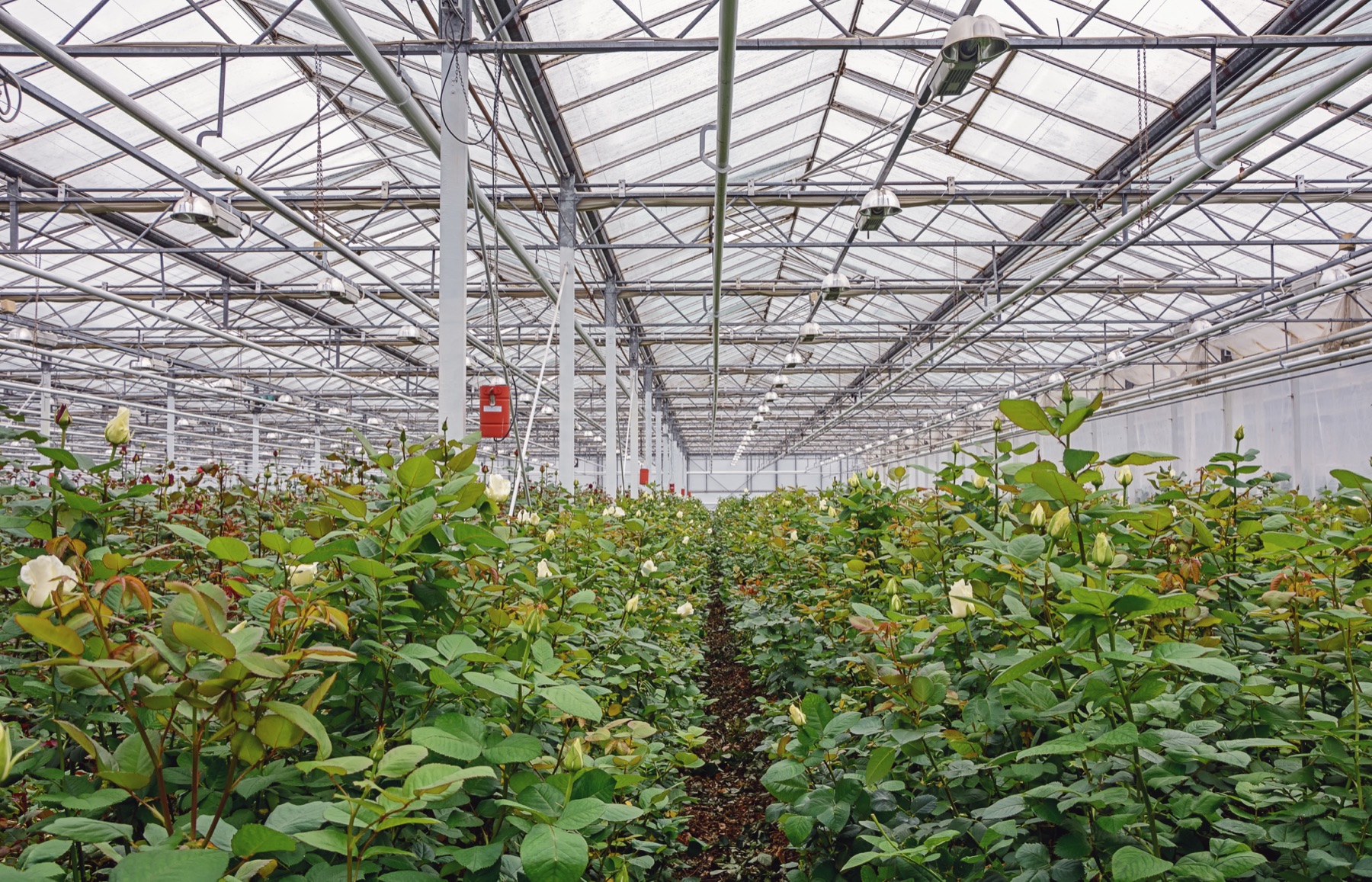
In David Austin Roses Ltd. v. GCM Ranch LLC, No. 3:24-cv-00882-B (N.D. Tex.), Judge Jane J. Boyle of the United States District Court for the Northern District of Texas, Dallas Division, dismissed a renowned English rose breeder’s plant-patent infringement count in a January 28, 2025 opinion and order — not because the accused roses looked any different, but because the complaint never said how the defendants had reproduced them. The ruling granted the defendants’ motion to dismiss Count I (willful plant-patent infringement of nine patents) without prejudice while letting David Austin’s Lanham Act trademark and unfair-competition claims proceed. Months later, after David Austin repleaded, the court sustained the amended patent claim. The two-step sequence is a clean, modern teaching example of the single feature that makes plant patents behave unlike any other patent in the Code: infringement requires proof not of copying a design or practicing a claim, but of asexual reproduction of the patented plant itself.
At a glance
- Case: David Austin Roses Ltd. v. GCM Ranch LLC, No. 3:24-cv-00882-B (N.D. Tex.)
- Court / judge: N.D. Tex. (Dallas Division), Hon. Jane J. Boyle
- Order dismissing patent count: January 28, 2025 (motion to dismiss granted as to Count I, denied as to the Lanham Act counts; leave to amend)
- Complaint filed: April 10, 2024
- At issue: Nine U.S. plant patents on David Austin “English Rose” varieties, including U.S. Plant Patent No. PP26,365 (“Auslevity,” sold as BEATRICE), plus federal trademark and unfair-competition claims against GCM Ranch LLC and individuals operating as “Ergongzi”
- Why dismissed: The complaint pleaded that the accused roses resembled the patented varieties but never alleged that the defendants asexually reproduced them — the statutory sine qua non of plant-patent infringement under 35 U.S.C. § 163
- Aftermath: David Austin filed a Second Amended Complaint adding factual detail on reproduction; in mid-2025 the court found the plant-patent claim adequately pleaded and the case proceeded in full
The Plant Patent Act and its peculiar infringement element
The Plant Patent Act of 1930, now codified at 35 U.S.C. §§ 161-164, extended patent protection to “[w]hoever invents or discovers and asexually reproduces any distinct and new variety of plant.” Asexual reproduction — propagation by grafting, budding, cutting, layering, division, or tissue culture rather than by seed — sits at the doctrinal center of the entire regime. It is the act the inventor must perform to earn the patent (proving the variety can be stably reproduced), and, critically, it is the act an accused infringer must perform to be liable.
Section 163 defines the exclusive right in terms of that act. A plant patent grants the right to exclude others from “asexually reproducing the plant, and from using, offering for sale, or selling the plant so reproduced, or any of its parts.” That phrasing — “the plant so reproduced” — means the protected scope reaches only plants that descend, through asexual propagation, from the patented specimen. A plant that merely shares the patented variety’s appearance, or that arose independently, falls outside the claim no matter how indistinguishable it looks.
The Federal Circuit cemented this reading in Imazio Nursery, Inc. v. Dania Greenhouses, 69 F.3d 1560 (Fed. Cir. 1995). There, a patentee holding U.S. Plant Patent No. PP5,336 on a heather variety named “Erica Sunset” won summary judgment of infringement below on evidence that the accused “Holiday Heather” was morphologically and phenologically identical. The Federal Circuit reversed. The statute, the court held, “requires asexual reproduction of the patented plant for there to be infringement,” and a plant patent’s scope is therefore limited to the patented plant and its asexually reproduced progeny — not to every plant of the same variety, however the latter came to exist. Identity of appearance can be evidence of asexual descent, but it is not the legal test. Independent development of a look-alike, the court noted, is a complete defense. Asexual reproduction, in the panel’s words, is the sine qua non: it is what the patentee must prove and what the defendant will seek to disprove.
That holding is exactly what tripped up David Austin’s first complaint.
Why resemblance was not enough
David Austin alleged that GCM Ranch and the related “Ergongzi” sellers were marketing and selling roses that matched nine of its patented varieties, and it supported the claim with photographs showing striking visual similarity between the accused roses and the patented ones. Under ordinary utility-patent logic, that might have sufficed to plead infringement — the products look like the claimed invention.
But plant patents are not ordinary patents, and Judge Boyle applied Imazio’s lesson at the pleading stage. The court found that David Austin “failed to provide any factual allegations to explain how Defendants have produced an infringing plant that is an asexual reproduction” of the patented varieties. Photographs of similar-looking roses, the court reasoned, do not bridge the gap between “these plants look alike” and “the defendants propagated their plants asexually from ours.” To state a plausible claim under Twombly and Iqbal, David Austin needed to allege facts about the mechanism of reproduction — that the defendants had grafted, budded, or layered the patented roses, for example — rather than rest on resemblance alone.
The court’s analysis echoed Driscoll’s Inc. v. California Berry Cultivars, LLC, where a strawberry breeder’s plant-patent theory failed for want of evidence that the accused party had actually used the patented plants as reproductive stock. The throughline is consistent: a plant indistinguishable from a patented variety is not, by that fact alone, an infringing one. Because the deficiency was a curable failure of factual specificity rather than a fatal legal defect, the court dismissed Count I without prejudice and gave David Austin leave to amend.
The cure: pleading the mechanism of reproduction
David Austin took the invitation. Its Second Amended Complaint added the missing factual content — allegations directed at how the defendants were propagating the patented varieties rather than merely that the end products looked the same. In a subsequent ruling, the court denied a renewed motion to dismiss and found that David Austin had sufficiently pleaded both trademark and plant-patent infringement, allowing the dispute to move forward on the merits.
The repleading episode is the practical payoff of the doctrine. Imazio tells us asexual reproduction is the element; David Austin shows that the element must be pleaded, with facts, not assumed from a photograph. For breeders enforcing plant patents — a notoriously evidence-hungry exercise, since the defendant’s propagation methods are usually hidden inside a competitor’s greenhouse — the case is a reminder to marshal whatever circumstantial proof of asexual descent exists (nursery records, the improbability of independent creation of an identical named variety, admissions, genetic testing) before filing, and to allege it expressly.
Where this sits in the larger plant-IP landscape
Plant patents under §§ 161-164 are only one of three federal tracks. Sexually reproduced and tuber-propagated varieties can be protected by certificates under the Plant Variety Protection Act, 7 U.S.C. § 2321 et seq., administered by the USDA. And in J.E.M. Ag Supply, Inc. v. Pioneer Hi-Bred International, Inc., 534 U.S. 124 (2001), the Supreme Court held — for the first time — that ordinary utility patents under 35 U.S.C. § 101 are also available for plants, including sexually reproducing crops, and that neither the Plant Patent Act nor the PVPA displaces § 101. A breeder of a new rose could, in principle, pursue a plant patent on the asexually propagated variety and a utility patent on, say, a novel trait or breeding method.
That overlap matters here because the infringement test is not the same across tracks. A utility patent on a plant reaches anyone who makes, uses, or sells what the claims cover, regardless of how the plant was reproduced — the Imazio asexual-reproduction limitation is specific to the plant-patent statute. A litigant who chose only plant patents, as David Austin did, accepts the narrower and more fact-intensive infringement standard that comes with them.
Open questions
- How much reproduction detail is “enough” at the pleading stage? David Austin shows that bare resemblance fails and that some allegation of propagation method suffices, but courts have not drawn a bright line on how specific a plaintiff must be before discovery into the defendant’s nursery practices.
- What role will genetic evidence play? DNA fingerprinting can establish that two plants are clonal — strong circumstantial proof of asexual descent — yet clonal identity still does not prove the defendant did the propagating rather than acquiring infringing stock elsewhere. The evidentiary weight of genetics under Imazio remains underdeveloped.
- Does the asexual-reproduction limit invite design-around by independent recreation? Imazio blesses independent development as a defense, but for many ornamentals, independently recreating an identical named variety is so improbable that the defense may be more theoretical than real.
Implications
- Plead the mechanism, not the resemblance. A plant-patent complaint must allege facts showing the accused plants were asexually reproduced from the patented variety; photographs of look-alikes will not survive a motion to dismiss.
- Build the asexual-reproduction record early. Breeders should gather nursery records, sourcing evidence, and—where available—genetic comparisons before suit, because the defendant’s propagation conduct is the crux and is rarely visible from the outside.
- Consider stacking protections. Where a plant also embodies a patentable trait or method, a utility patent (available since J.E.M. Ag Supply) can offer an infringement theory that does not depend on proving asexual reproduction.
- Trademark claims travel a separate path. David Austin’s Lanham Act counts survived from the start; brand protection for named varieties can carry an enforcement action even when the patent count needs repleading.
- Dismissals are often curable. A § 163 pleading defect is typically fixable with added factual detail, as the David Austin sequence demonstrates—so a first-round dismissal without prejudice is a roadmap, not a defeat.
Frequently asked questions
Why couldn’t David Austin win just by showing the roses looked identical? Because plant-patent infringement under 35 U.S.C. § 163, as construed in Imazio Nursery v. Dania Greenhouses, turns on whether the accused plant was asexually reproduced from the patented one — not on appearance. Identical looks can be evidence of asexual descent, but a plant that arose independently, even an indistinguishable one, does not infringe.
What does “asexual reproduction” mean in this context? Propagation without seeds — by grafting, budding, taking cuttings, layering, division, or tissue culture — so that the new plant is genetically a clone of the parent. It is both the act that qualifies a variety for a plant patent and the act an accused party must perform to be liable.
Could David Austin have used a different kind of patent to avoid this problem? Possibly. Under J.E.M. Ag Supply v. Pioneer Hi-Bred (2001), utility patents are available for plants, and a utility patent’s infringement test does not require proving asexual reproduction. Plant patents under §§ 161-164, however, carry that distinctive and more demanding element.
Authorities and sources
- Federal Circuit opinion, Imazio Nursery, Inc. v. Dania Greenhouses, 69 F.3d 1560 (Fed. Cir. 1995): https://law.justia.com/cases/federal/appellate-courts/F3/69/1560/610026/
- J.E.M. Ag Supply, Inc. v. Pioneer Hi-Bred International, Inc., 534 U.S. 124 (2001): https://supreme.justia.com/cases/federal/us/534/124/
- Docket, David Austin Roses Ltd. v. GCM Ranch LLC, No. 3:24-cv-00882 (N.D. Tex.): https://dockets.justia.com/docket/texas/txndce/3:2024cv00882/388559
- Sterne Kessler, “Rooted in Rights: Lessons From Plant Patent Infringement and Invalidity Cases”: https://www.sternekessler.com/news-insights/insights/rooted-in-rights-lessons-from-plant-patent-infringement-and-invalidity-cases/
- The IPKat, “Latest battle in the War of the Roses almost results in English defeat in Texas”: https://ipkitten.blogspot.com/2025/02/latest-battle-in-war-of-roses-almost.html
- AIPH FloraCulture, “David Austin Wedding Rose Collection IP Case Advances in U.S. Court”: https://aiph.org/floraculture/news/david-austin-wedding-rose-collection-ip-case-advances-in-u-s-court/
- 35 U.S.C. §§ 161-164 (Plant Patent Act): https://www.law.cornell.edu/uscode/text/35/161