
Egyptian Goddess v. Swisa: How the Federal Circuit Killed the Point-of-Novelty Test
Sitting en banc, the Federal Circuit scrapped the separate point-of-novelty test for design-patent infringement and made the prior-art-informed ordinary observer the sole standard.
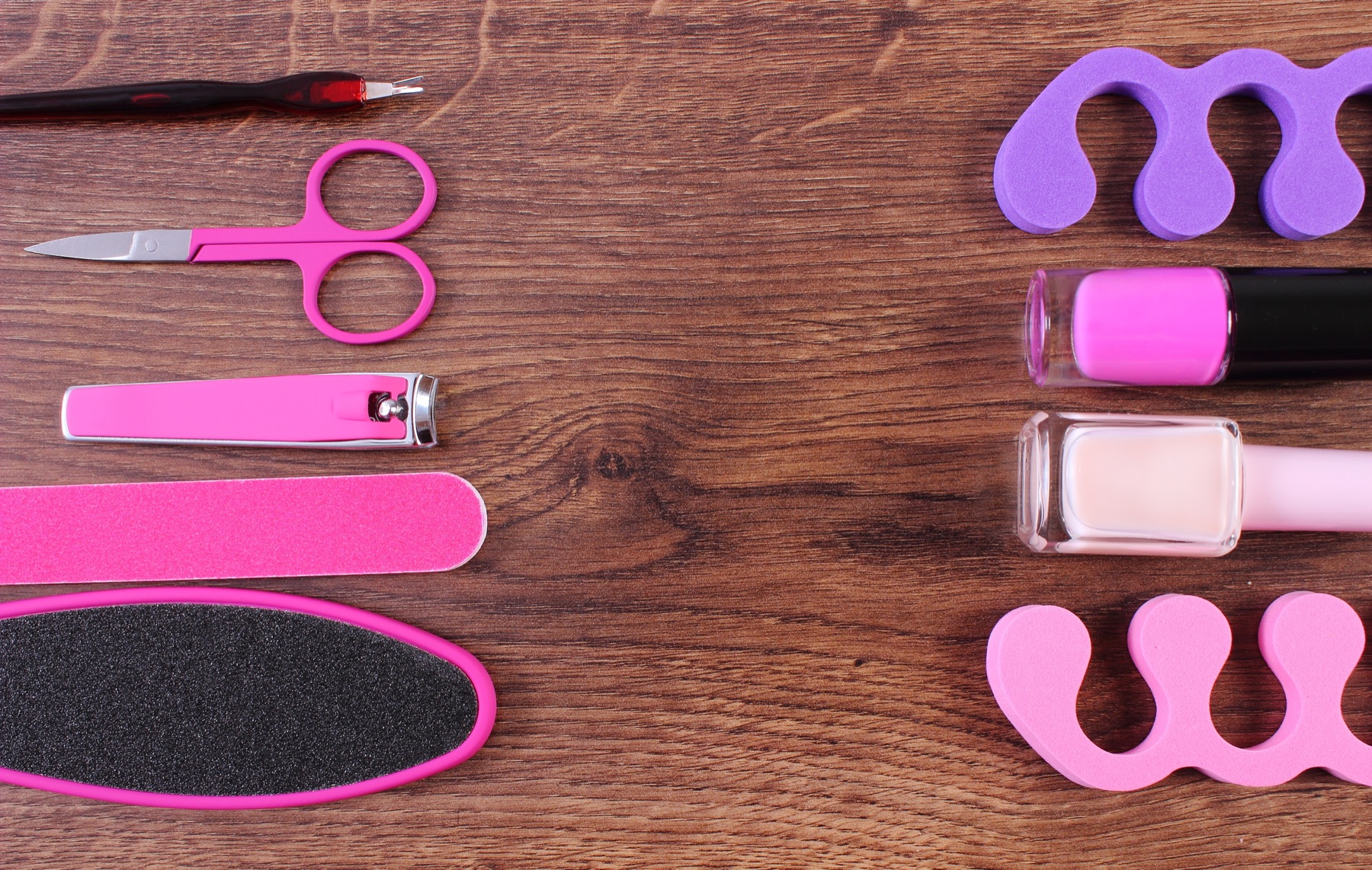
Egyptian Goddess, Inc. v. Swisa, Inc., 543 F.3d 665 (Fed. Cir. 2008), decided en banc on September 22, 2008 (No. 2006-1562), is the most consequential design-patent infringement decision of the modern era. In an opinion that swept away a doctrine the court had applied for decades, the Federal Circuit eliminated the “point of novelty” test as a separate requirement for proving design-patent infringement and held that the Gorham ordinary-observer test, properly applied against the backdrop of the prior art, is the sole standard. The decision simplified the doctrine on paper while quietly relocating the prior art to the center of the analysis.
At a glance
- Case: Egyptian Goddess, Inc. v. Swisa, Inc., 543 F.3d 665 (Fed. Cir. 2008) (en banc)
- Decided: September 22, 2008; Docket No. 2006-1562
- Subject matter: A design patent for the ornamental design of a nail buffer
- Holding: The point-of-novelty test is abolished as a separate test; design-patent infringement is determined solely by the ordinary-observer test, applied by an observer familiar with the prior art
- Disposition: Affirmed summary judgment of non-infringement in favor of Swisa
Two tests pulling in opposite directions
For decades before Egyptian Goddess, the Federal Circuit had required a design-patent plaintiff to satisfy two distinct tests to prove infringement. The first was the venerable ordinary-observer test from Gorham Co. v. White: would an ordinary observer, giving the attention a purchaser usually gives, find the accused and patented designs substantially the same? The second, layered on top, was the “point of novelty” test: the accused design also had to appropriate the specific feature or features that distinguished the patented design from the prior art — the “points of novelty” that made it patentable in the first place.
In theory the two tests were complementary. In practice they had drifted apart and grown unworkable. When a patented design departed from the prior art in many small ways rather than one dramatic way, courts struggled to identify discrete “points of novelty” at all, and the inquiry collapsed into a mechanical, element-by-element checklist — precisely the kind of dissection Gorham had warned against. The point-of-novelty test invited defendants to win by isolating individual features and arguing that no single one had been copied, even where the overall designs looked nearly the same.
The facts: a nail buffer with one fewer side
The case itself was modest. Egyptian Goddess owned a design patent claiming an ornamental design for a nail buffer — a hollow tube, square in cross-section, with raised buffing pads on three of its four sides. Swisa sold a nail buffer that was likewise a hollow square tube, but with buffing pads on all four sides. Egyptian Goddess sued for infringement; the district court granted summary judgment of non-infringement, and a panel of the Federal Circuit affirmed. The full court then took the case en banc to reconsider the governing framework.
The modesty of the article underscored the point. Whether a three-pad buffer and a four-pad buffer infringe is exactly the kind of close visual question that demands a coherent test — and the existing two-test regime did not supply one.
The holding: one test, informed by the prior art
The en banc court abolished the point-of-novelty test as a freestanding requirement. Going forward, it held, the ordinary-observer test is the sole test for design-patent infringement. But the court did not simply return to a naked Gorham comparison. It folded the work the point-of-novelty test had tried to do into the ordinary-observer inquiry itself, by specifying who the ordinary observer is: one familiar with the prior art.
That refinement is the doctrinal core of the decision. When the ordinary observer is deemed familiar with the prior art, the comparison automatically accounts for what was already known. In a crowded field — where many prior designs already resemble the patented design — even small differences between the accused and patented designs take on significance, because the informed observer’s eye is drawn to whatever distinguishes the patented design from the things that came before. Conversely, where the patented design is a dramatic departure from the prior art, the observer is more likely to be deceived by an accused design that captures its overall look. The prior art thus calibrates the comparison without being broken out into a separate test.
The court also clarified the burden and the role of the prior art at trial. The patentee bears the burden of proving infringement by a preponderance of the evidence; where the parties dispute the effect of the prior art, the accused infringer typically introduces the prior-art designs it contends limit the scope of the claimed design, and the fact-finder compares the three — claimed design, accused design, and prior art — through the eyes of the informed ordinary observer. Applying that framework, the court affirmed summary judgment for Swisa: an ordinary observer familiar with the prior-art buffers would not be deceived into regarding the four-sided Swisa buffer as the same as the patented three-sided design.
Claim construction: less is often more
Egyptian Goddess also addressed how trial courts should construe design-patent claims, which are defined by drawings rather than words. The court declined to require district courts to translate a design patent’s figures into a detailed verbal description. Attempting to put a complex visual design into words, the court cautioned, risks both over- and under-stating the claim and can mislead the fact-finder by emphasizing particular features. Trial courts retain discretion to issue some guidance — for example, distinguishing functional from ornamental aspects or addressing the effect of the prior art — but a detailed verbal claim construction is neither required nor always wise. The drawings, in the end, are the claim.
Open questions
The decision resolved the structure of the infringement test but left edges to be worked out. How much prior art a defendant may introduce, and how district courts should manage that evidence at summary judgment versus trial, has continued to generate disputes. The proper treatment of functional features within the ordinary-observer comparison — what to factor out before judging ornamental similarity — remained a live and contested issue. And the interaction between Egyptian Goddess and the damages regime under 35 U.S.C. § 289 would surface years later in Samsung v. Apple, where identifying the relevant “article of manufacture” proved as difficult as identifying infringement. More recently, the court’s parallel willingness to discard rigid design-patent doctrine resurfaced in the obviousness context, where the en banc court overruled the Rosen-Durling framework.
Implications
- One test, not two. Plaintiffs no longer must separately prove appropriation of a “point of novelty”; the ordinary-observer test is the whole game.
- The prior art is now central to infringement, not just validity. Defendants in crowded fields can narrow the practical scope of a design patent by putting close prior art before the fact-finder.
- Drawings remain the claim. Litigants should not expect — or necessarily want — a detailed verbal construction of a design claim; the figures control.
- Crowded-field designs are weaker. A design that differs only modestly from the prior art will be harder to enforce, because the informed observer notices small differences.
Frequently asked questions
What did Egyptian Goddess actually change? It eliminated the point-of-novelty test as a separate requirement for design-patent infringement and made the Gorham ordinary-observer test the sole test, while specifying that the ordinary observer is one familiar with the prior art.
Does the prior art still matter after this case? Yes — arguably more than before. Instead of a standalone test, the prior art now informs the ordinary-observer comparison directly, so close prior art can sharpen the observer’s attention to small differences and narrow a patent’s effective scope.
Do courts have to write a verbal description of a design claim? No. The court held that a detailed verbal claim construction is not required and can be counterproductive; trial courts have discretion to offer limited guidance, but the patent’s drawings define the claim.
Authorities and sources
- Egyptian Goddess, Inc. v. Swisa, Inc., 543 F.3d 665 (Fed. Cir. 2008) (en banc), full opinion: Federal Circuit (PDF) and BitLaw
- Practitioner analysis: Foley & Lardner
- Academic commentary: Harvard Journal of Law & Technology Digest
- Gorham Co. v. White, 81 U.S. (14 Wall.) 511 (1871), origin of the ordinary-observer test: Justia