
The Flexible Bar Survives: Festo v. Shoketsu Kinzoku and the Limits of Estoppel
The Supreme Court rejected an absolute bar on equivalents after a narrowing amendment, replacing it with a rebuttable presumption that still governs the doctrine of equivalents today.
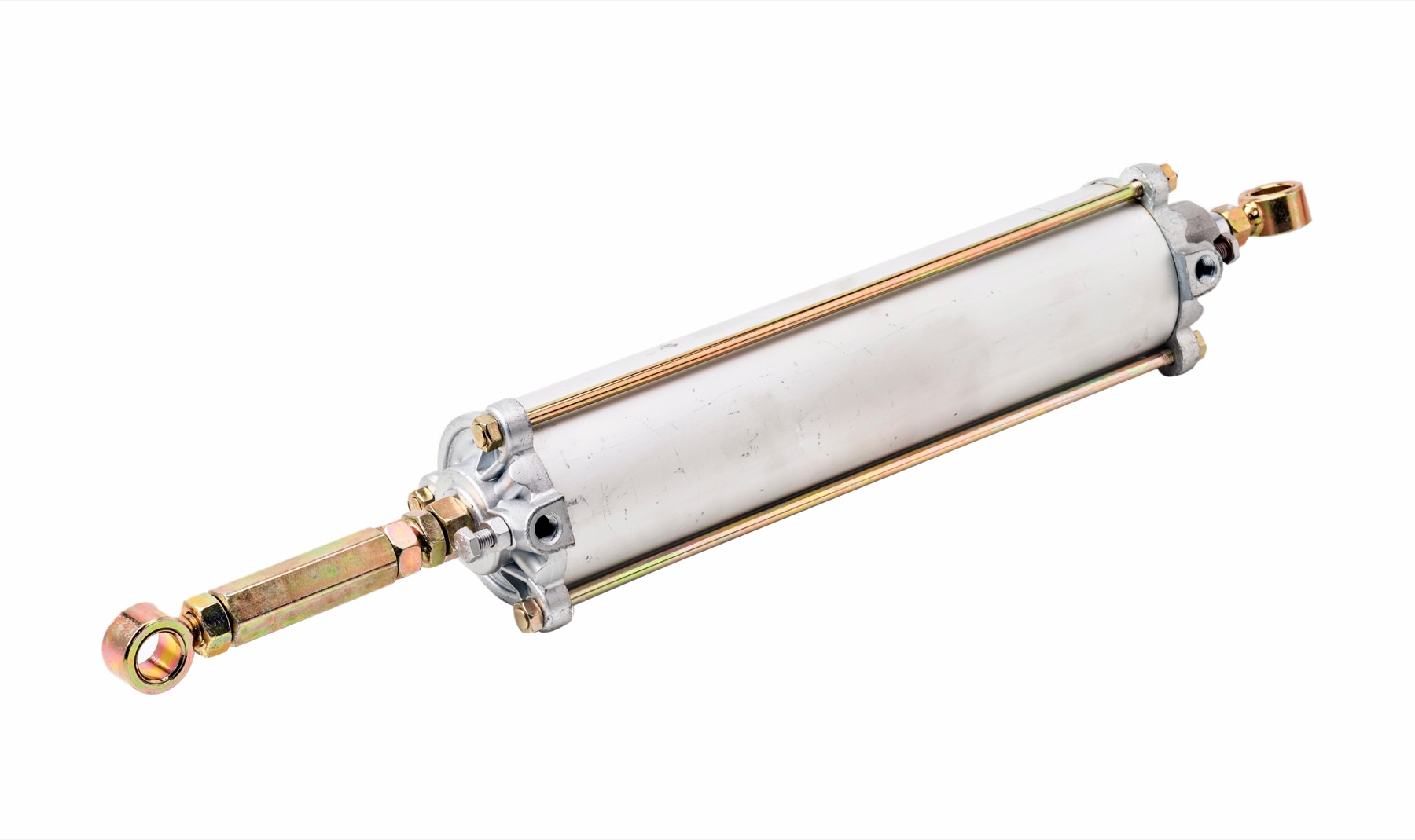
In Festo Corp. v. Shoketsu Kinzoku Kogyo Kabushiki Co., No. 00-1543 (U.S. May 28, 2002), the Supreme Court delivered the modern framework for one of patent law’s most consequential collisions: what happens to the doctrine of equivalents when a patentee narrowed a claim during prosecution. Writing for a unanimous Court, Justice Kennedy rejected the Federal Circuit’s rigid “complete bar” and restored a presumption-based approach that patentees can, in defined circumstances, overcome. More than two decades later, Festo remains the controlling word on prosecution history estoppel, and every analysis of estoppel—including the Federal Circuit’s recent cancellation cases—descends from it.
At a glance
- Court and date: Supreme Court of the United States, decided May 28, 2002; docket No. 00-1543. The decision reversed and remanded an en banc judgment of the U.S. Court of Appeals for the Federal Circuit.
- Patents: Two patents on magnetically coupled rodless cylinders—linear actuators that move a piston along a sealed tube without a protruding rod—including the Stoll patent (U.S. Patent No. 4,354,125).
- The amendments: During prosecution, claims were narrowed to add limitations, including a pair of one-way sealing rings and an outer sleeve made of magnetizable material. The amendments responded to requirements of the Patent Act, including 35 U.S.C. § 112.
- Accused device: A competing rodless cylinder using a single two-way sealing ring and a non-magnetizable sleeve—differences Festo sought to bridge through the doctrine of equivalents.
- Holding: A narrowing amendment made for any statutory reason can give rise to estoppel, but estoppel does not bar all equivalents of the amended element. Instead, a rebuttable presumption of surrender applies, which the patentee may overcome.
The problem Festo had to solve
The doctrine of equivalents lets a patentee reach an accused product that does not literally satisfy every claim limitation but differs only insubstantially. Prosecution history estoppel is its principal check: a patentee who surrenders subject matter to obtain allowance cannot later recapture it by calling the accused variation an “equivalent.” The two doctrines exist in permanent tension, and the question in Festo was how sharply estoppel should cut.
The en banc Federal Circuit had answered with a bright line. Under its rule, any narrowing amendment made for a reason related to patentability created a complete bar: the amended claim element was entitled to no range of equivalents at all. The appeal of the rule was predictability—competitors reading a file history could know with certainty that an amended element would be construed strictly. Its cost was fairness to inventors, who would forfeit protection against trivial, after-arising variations they could not have anticipated when they amended.
Two holdings that reshaped estoppel
The Supreme Court split the question in two, and answered each in a way that reverberates today.
First, on when estoppel can arise, the Court sided with a broad rule. Estoppel is not confined to amendments made to avoid prior art. A narrowing amendment made to satisfy any requirement of the Patent Act—including § 112’s demands concerning the form and adequacy of the application—can trigger estoppel. Patentability, the Court reasoned, encompasses more than novelty and nonobviousness; an amendment made to secure a patent is a concession about claim scope regardless of which statutory provision prompted it. This holding foreclosed the argument that “housekeeping” amendments are estoppel-free.
Second, and decisively, on how far estoppel reaches, the Court rejected the complete bar. A narrowing amendment does not surrender every conceivable equivalent of the amended element. The Court worried that an absolute rule would defeat settled expectations: for generations, patentees had drafted and amended claims against the backdrop of a flexible doctrine, reasonably assuming that some equivalents survived. To convert every amendment into a total forfeiture would, in effect, change the rules after the fact and disserve the very inventors the patent system rewards.
The presumption and its three escape hatches
In place of the complete bar, the Court adopted what practitioners call the flexible bar: a rebuttable presumption. When a patentee narrows a claim by amendment for a reason related to patentability, the patentee is presumed to have surrendered all territory between the original and amended claim limitations. The burden then shifts to the patentee to show that the amendment did not surrender the particular equivalent at issue.
The Court identified the ways a patentee can rebut the presumption, and these three rebuttals remain the working vocabulary of estoppel litigation:
- Unforeseeability. The equivalent was unforeseeable at the time of the amendment—often because it involved later-developed technology that the patentee could not have claimed.
- Tangentiality. The rationale underlying the amendment bore no more than a tangential relation to the equivalent in question, meaning the patentee gave up the territory for reasons unrelated to the accused variation.
- Some other reason. There exists some other reason suggesting the patentee could not reasonably have been expected to have described the equivalent—a residual, fact-bound category.
The structure matters as much as the substance. By making surrender a presumption rather than a rule, the Court preserved the doctrine of equivalents as a meaningful remedy while still penalizing patentees for the concessions they made on the record. The presumption is hard to overcome, but it is not impossible—and that distinction is the whole of modern estoppel practice.
Open questions
Festo answered the doctrinal question but generated a generation of application questions. Chief among them is how courts should measure tangentiality: when is an amendment’s purpose “merely tangential” to an accused equivalent, as opposed to centrally aimed at it? The line is notoriously fact-intensive, and outcomes turn on a careful reading of why each amendment was made. A second open question is the temporal frame for foreseeability—precisely what a person of ordinary skill should have foreseen “at the time of the amendment,” and how courts treat technologies that existed but were not obviously relevant. Finally, Festo addressed amendments; later cases have had to decide how its logic extends to other prosecution conduct, including argument-based estoppel and the cancellation of related claims.
Implications
- Amendments are concessions, full stop. Any narrowing amendment for a statutory reason—prior art or § 112—presumptively surrenders the territory between the old and new claim scope.
- Preserve the rebuttals on the record. Tangentiality, unforeseeability, and “other reason” are the patentee’s only routes back; litigants who fail to develop them forfeit their best arguments.
- Draft with foreseeability in mind. Equivalents involving technology foreseeable at the time of amendment are the hardest to recapture, so claim breadth must be secured up front.
- Prosecutors build the estoppel record. Every remark and amendment in the file history can later define the outer limit of equivalents; clarity about the reason for an amendment can preserve tangentiality arguments.
- The doctrine of equivalents endures. Festo confirmed that narrowing a claim does not extinguish equivalents wholesale, keeping the doctrine alive as a check on trivial design-arounds.
Frequently asked questions
Did Festo eliminate the doctrine of equivalents after an amendment? No. The Court expressly rejected the Federal Circuit’s complete bar. A narrowing amendment creates a rebuttable presumption of surrender, not an absolute forfeiture, and the patentee may overcome that presumption by showing unforeseeability, tangentiality, or some other reason the equivalent was not surrendered.
Does estoppel apply only to amendments made to avoid prior art? No. Festo held that a narrowing amendment made to satisfy any requirement of the Patent Act—including § 112—can trigger prosecution history estoppel. The reason for the amendment does not need to be prior art for the presumption to attach.
What must a patentee prove to overcome the presumption? The patentee bears the burden of showing that the amendment did not surrender the specific equivalent at issue, using one of the three recognized rebuttals: the equivalent was unforeseeable at the time of the amendment, the amendment’s rationale was merely tangential to the equivalent, or some other reason explains why the patentee could not reasonably have described it.
Authorities and sources
- Supreme Court syllabus and opinion, Festo Corp. v. Shoketsu Kinzoku Kogyo Kabushiki Co., No. 00-1543 (U.S. May 28, 2002): https://supreme.justia.com/cases/federal/us/535/722/
- Cornell Legal Information Institute, full opinion text: https://www.law.cornell.edu/supremecourt/text/535/722
- Cornell LII syllabus (docket 00-1543): https://www.law.cornell.edu/supct/html/00-1543.ZS.html
- FindLaw case report, Festo Corp. v. Shoketsu Kinzoku Kogyo Kabushiki Co.: https://caselaw.findlaw.com/court/us-supreme-court/535/722.html
- Wikipedia overview and procedural history: https://en.wikipedia.org/wiki/Festo_Corp._v._Shoketsu_Kinzoku_Kogyo_Kabushiki_Co.