
Mayo v. Prometheus: How a Diagnostic Method Became a Law of Nature
A unanimous Supreme Court held that correlations between drug-metabolite levels and dosing were unpatentable laws of nature, and built the two-step test that would reshape Section 101.
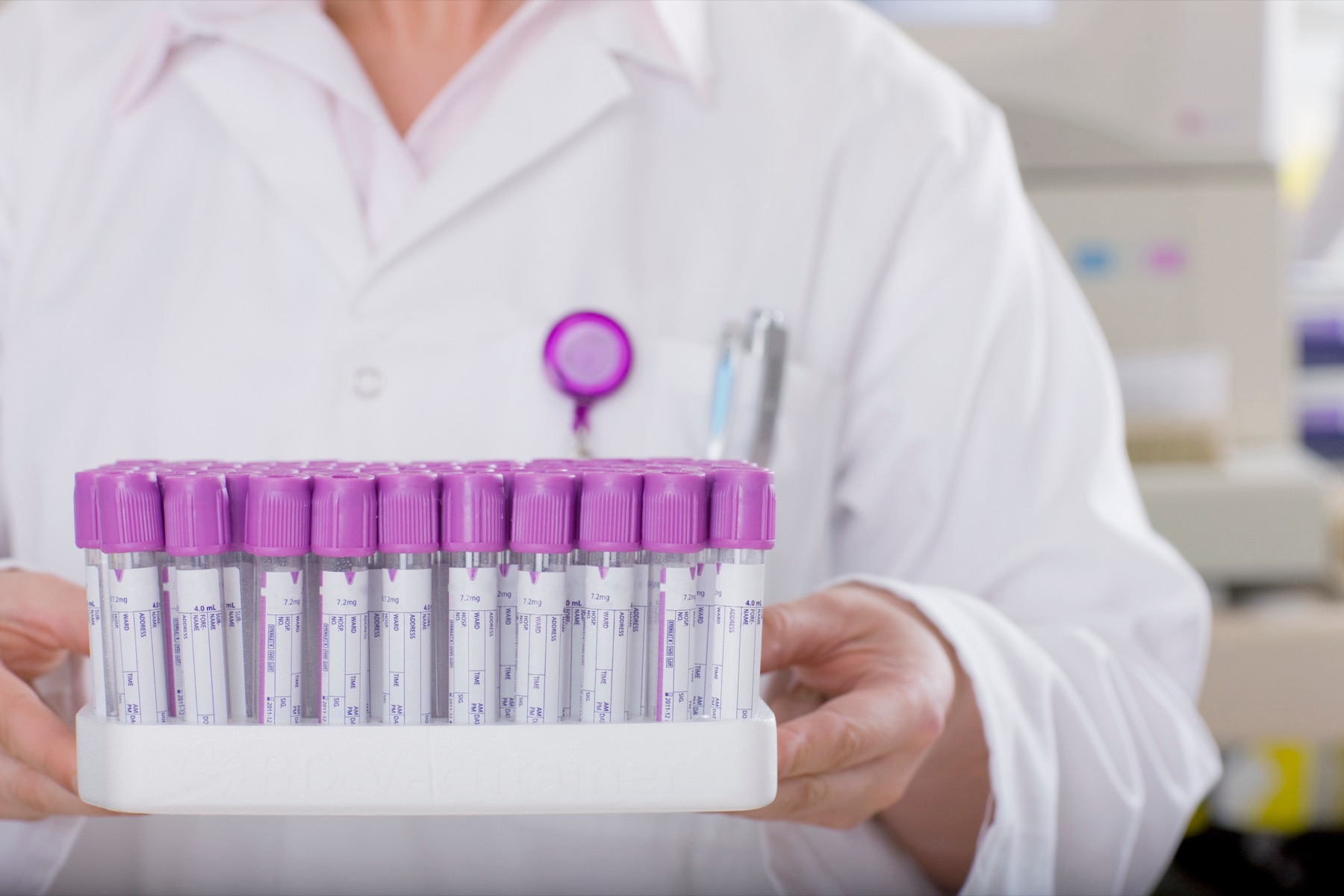
Mayo Collaborative Services v. Prometheus Laboratories, Inc., 566 U.S. 66 (2012), Docket No. 10-1150, decided March 20, 2012, is the case that gave patent-eligibility doctrine its modern shape. Writing for a unanimous Court, Justice Breyer held that Prometheus’s claimed methods for calibrating thiopurine drug dosages — based on the correlation between metabolite levels in a patient’s blood and the likelihood of harm or ineffectiveness — were directed to an unpatentable law of nature. More consequentially, the opinion articulated the analytical sequence that the Court would later generalize, in Alice, into the now-familiar two-step test. Mayo is where the inquiry shifted from cataloging exceptions to applying a framework.
At a glance
- Case: Mayo Collaborative Services v. Prometheus Laboratories, Inc., 566 U.S. 66 (2012), Docket No. 10-1150
- Court: Supreme Court of the United States, on certiorari to the Federal Circuit
- Decided: March 20, 2012; unanimous
- Opinion: Justice Breyer, for the Court
- Subject matter: Methods of optimizing thiopurine dosing for autoimmune diseases (e.g., Crohn’s disease, ulcerative colitis) by reference to 6-thioguanine metabolite levels
- Holding: Claims that recite a natural correlation and add only well-understood, routine, conventional activity are directed to an unpatentable law of nature under 35 U.S.C. § 101
The claims and the natural correlation
Thiopurine drugs are used to treat autoimmune diseases, but patients metabolize them differently, so the same dose can be ineffective for one patient and toxic for another. The inventors identified therapeutic windows: when the concentration of 6-thioguanine metabolites in a patient’s blood fell below roughly 230 picomoles per 8 × 10⁸ red blood cells, the dose was likely too low to be effective; above approximately 400 picomoles, the dose was likely too high and risked harm. The metabolites themselves were already known; the discovery was the correlation between their measured levels and clinical outcomes.
Prometheus’s claims described a method comprising two principal steps: “administering” the thiopurine drug to a patient, and “determining” the level of the resulting metabolites, with the claim then reciting that a measured level above or below the stated thresholds “indicates a need” to decrease or increase the dose. Mayo initially purchased and used Prometheus’s diagnostic tests, then developed and announced its own. Prometheus sued for infringement, and the litigation reached the Supreme Court on the question whether the claims covered patent-eligible subject matter.
The two-step analysis
Justice Breyer’s opinion proceeded in two analytical moves that would become the template for § 101 analysis. First, the Court identified the claims as directed to a law of nature: the relationship between metabolite concentrations and the likelihood that a dosage will prove harmful or ineffective is a consequence of the way the human body metabolizes thiopurine compounds — an entirely natural phenomenon. Laws of nature, the Court reiterated, are not patentable in themselves, however newly discovered.
Second, the Court asked whether the claim’s additional elements — beyond the natural law itself — transformed the claim into a patent-eligible application of that law. They did not. The “administering” step simply identified the audience of doctors already treating patients with thiopurines; the “determining” step told doctors to measure metabolite levels using methods that were well-understood, routine, and conventional in the field; and the concluding “indicates” language merely told doctors to account for the natural law in their decisions. Considered individually and as an ordered combination, these steps added nothing inventive to the natural correlation. A claim that says no more than “apply the natural law” — even when dressed in the language of a treatment method — does not become eligible.
Preemption, and the rejection of a Section 101 detour
A central theme of Mayo is preemption: the concern that a patent on a law of nature would foreclose others from using that fundamental relationship in their own, possibly very different, applications. The claims here, the Court reasoned, threatened to tie up the natural correlation itself, leaving the medical community unable to make use of it without infringing.
Equally important is what the Court refused to do. The government had urged that the laws-of-nature exclusion be left largely to the other patentability requirements — novelty under § 102 and non-obviousness under § 103 — rather than policed under § 101. The Court rejected that approach. It held that the eligibility inquiry under § 101 is a distinct threshold question that cannot be collapsed into novelty or obviousness, even though the analyses may overlap in considering what is conventional or well-known. That insistence on § 101 as an independent gate is one of Mayo’s most durable, and most criticized, contributions.
Open questions
Mayo answered the case before it but opened deep questions for the diagnostic and life-sciences industries. How much beyond a natural correlation must a claim add to count as an “inventive concept,” when the very value of a discovery often lies in the correlation itself? Why should the eligibility inquiry borrow concepts of conventionality from the obviousness analysis while remaining formally distinct from it? And does the decision leave room to patent genuinely new diagnostic methods, or does it effectively place the most important discoveries in personalized medicine beyond reach? The Court acknowledged the policy stakes but declined to draw the line with precision, inviting the very uncertainty that diagnostics patentees have litigated ever since.
Implications
- Diagnostics face a steep climb. Claims that detect a natural correlation and then instruct a practitioner to act on it are vulnerable unless they recite a genuinely new and non-conventional technique for applying the discovery.
- “Apply it” is not enough. Reciting a natural law and appending conventional measurement or administration steps will not transform an ineligible concept into an eligible application.
- Section 101 is its own gate. Eligibility cannot be deferred to novelty and obviousness; a claim may be new yet still fail at the threshold.
- The blueprint for Alice. The two-step structure — identify the exception, then search for an inventive concept — was carried forward and generalized to abstract ideas two years later.
Frequently asked questions
What exactly was the “law of nature” in Mayo? The correlation between the concentration of thiopurine metabolites in a patient’s blood and the likelihood that a given dose would be harmful or ineffective — a natural consequence of human metabolism.
Why didn’t the administering and determining steps save the claims? Because they were well-understood, routine, and conventional. They identified the relevant patients and told doctors to measure something using known methods, adding nothing inventive to the underlying natural law.
How does Mayo relate to Alice? Mayo created the two-step framework — first ask whether a claim is directed to a patent-ineligible concept, then ask whether additional elements supply an inventive concept. Alice applied that same framework to abstract ideas and computer-implemented claims.
Authorities and sources
- Mayo Collaborative Services v. Prometheus Laboratories, Inc., 566 U.S. 66 (2012), Docket No. 10-1150 (decided March 20, 2012). Justia; Cornell Legal Information Institute.
- Full-text opinion and analysis via BitLaw.
- Subject matter (thiopurine metabolites, therapeutic thresholds), unanimous vote, and authorship corroborated by Wikipedia: Mayo Collaborative Services v. Prometheus Laboratories.