
Raising the Bar: Therasense v. Becton, Dickinson and the New Inequitable-Conduct Standard
The en banc Federal Circuit rebuilt the inequitable-conduct doctrine around but-for materiality and specific intent to deceive, narrowing the 'plague' of unenforceability defenses.
In Therasense, Inc. v. Becton, Dickinson & Co., No. 2008-1511 (Fed. Cir. May 25, 2011) (en banc), the U.S. Court of Appeals for the Federal Circuit took an entire doctrine in for repair. Writing for a court divided 6-1-4, Chief Judge Rader rebuilt the law of inequitable conduct from the ground up, replacing a sprawling, fact-intensive inquiry with two demanding elements: but-for materiality and specific intent to deceive the U.S. Patent and Trademark Office. The decision vacated a judgment of unenforceability entered by the U.S. District Court for the Northern District of California (Judge William Alsup) and remanded the case for reconsideration under the newly tightened framework. More than a decade later, Therasense remains the controlling statement of when an applicant’s conduct before the Patent Office can destroy an otherwise valid patent.
At a glance
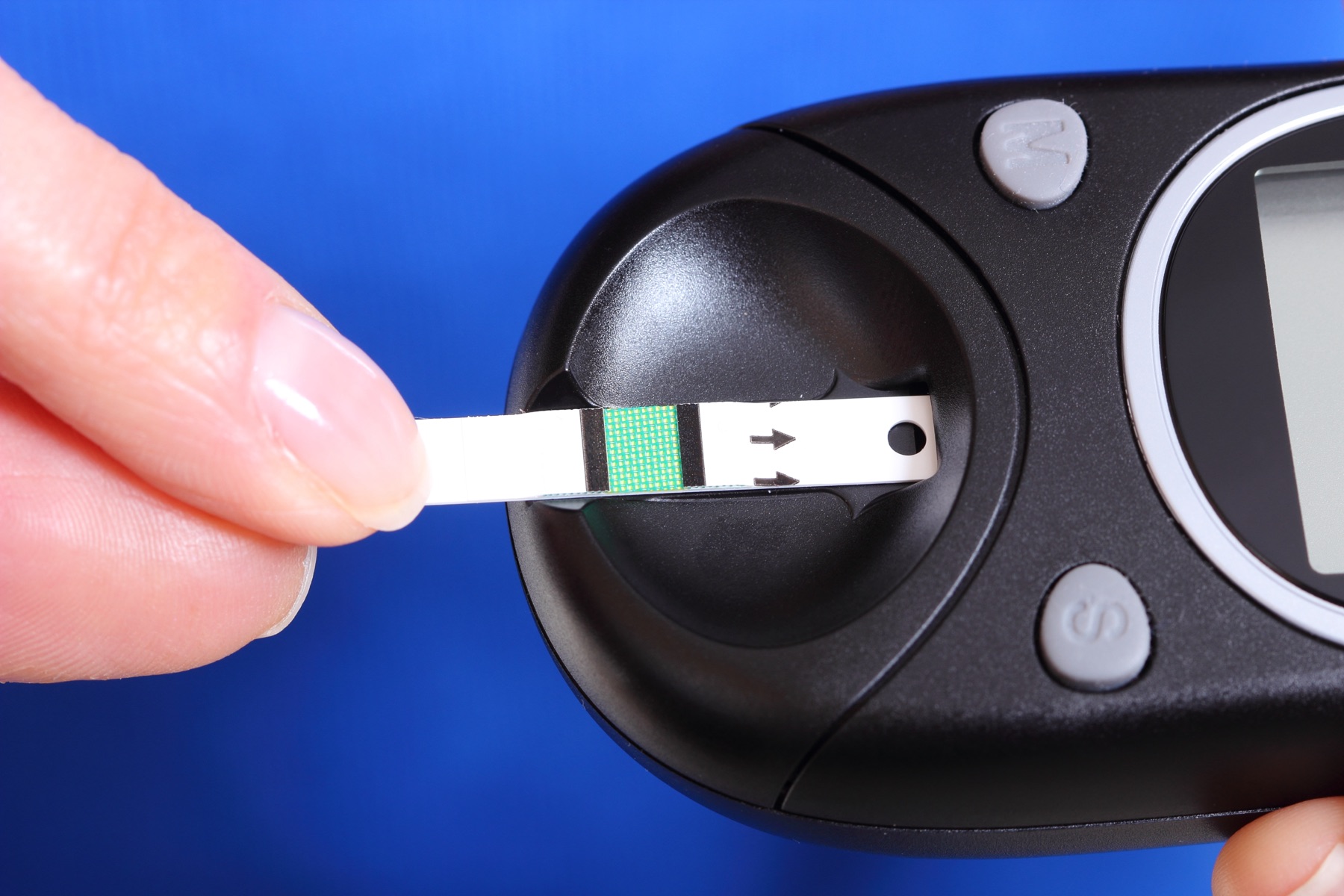
- Patent: U.S. Patent No. 5,820,551, directed to a disposable electrochemical sensor strip for measuring glucose in whole blood without a protective membrane over the electrode.
- Owner/appellant: Therasense, Inc. (later Abbott Diabetes Care).
- The conduct at issue: During prosecution of the ‘551 patent, Abbott told the PTO that a sentence in a prior-art reference (its own earlier ‘382 patent) describing a membrane as “optionally, but preferably” required was a non-limiting patent phrase. Years earlier, while prosecuting the European counterpart, Abbott’s representatives had told the European Patent Office that the same language meant the membrane was optional in the technical sense. Abbott did not disclose those EPO submissions to the PTO.
- District court: Held the ‘551 patent unenforceable for inequitable conduct after finding the EPO statements both material and withheld with intent to deceive.
- Holding (en banc): Vacated and remanded. Inequitable conduct requires clear and convincing evidence of (1) but-for materiality of the withheld information and (2) a specific intent to deceive—evaluated as separate elements, with no “sliding scale” between them.
Why the court intervened
By 2011 the inequitable-conduct defense had become, in the majority’s words, an “atomic bomb” that defendants detonated routinely. Because a single finding of inequitable conduct rendered an entire patent—and sometimes related patents—unenforceable, accused infringers had every incentive to plead it. The pleading standard was low, the materiality standard was diffuse (often keyed to the PTO’s broad Rule 56 definition), and courts applied a “sliding scale” under which a strong showing of materiality could compensate for a weak showing of intent, and vice versa.
The consequences spilled back into the Patent Office itself. Fearing later accusations, applicants buried examiners in marginally relevant references, degrading examination quality and inflating prosecution costs. The Therasense majority framed its task as restoring the doctrine to its original, narrow purpose: a tool for the most egregious acts of deception, not a routine litigation gambit.
But-for materiality—with a narrow exception
The most consequential holding concerns materiality. The court rejected the PTO’s Rule 56 standard and held that, as a general rule, withheld information is material only if the patent claim would not have issued had the examiner known of it. In other words, the accused infringer must show that the PTO, applying a preponderance standard and giving claims their broadest reasonable construction, would have refused the claim but for the misconduct. This ties unenforceability directly to patent validity: if the claim would have issued anyway, the withheld reference did no harm to the public.
The majority carved out a single exception for affirmative egregious misconduct—for example, the filing of an unmistakably false affidavit. Such fabrication is material per se, on the theory that a deliberate lie to the agency offends the patent system regardless of whether the lie changed the outcome. But mere nondisclosure of prior art, even highly relevant prior art, falls under the but-for rule.
For Therasense itself, this reframing mattered enormously. The district court had found the EPO submissions material under the looser standard. On remand, the question became whether the ‘551 claims would have issued had the examiner seen Abbott’s contradictory European statements—a question the Federal Circuit directed the trial court to answer afresh.
Specific intent—and the death of the sliding scale
The second pillar concerns intent. The court held that the accused infringer must prove, by clear and convincing evidence, that the applicant knew of the reference, knew it was material, and made a deliberate decision to withhold it. Negligence—even gross negligence—is not enough. Critically, intent to deceive must be the single most reasonable inference drawn from the evidence; where multiple reasonable inferences exist, intent cannot be found.
The majority then dismantled the sliding scale. Materiality and intent are separate requirements, each independently proven. A court may not infer intent solely from a high degree of materiality, nor may it excuse weak intent evidence because the withheld reference was important. This separation is the doctrine’s structural backbone after Therasense: a litigant who proves a withheld reference was devastating but cannot prove a deliberate decision to deceive simply loses.
Open questions
Therasense settled the framework but seeded new disputes. First, the affirmative-egregious-misconduct exception remains under-defined. The majority pointed to false affidavits, but lower courts have wrestled with whether other conduct—misleading attorney argument, selective characterization of data—rises to that level or stays within the but-for rule. Second, the “single most reasonable inference” formulation places enormous weight on the absence of innocent explanations; how aggressively trial courts must hunt for those explanations continues to vary. Third, Therasense governs litigation, but the PTO retained its own Rule 56 duty-of-candor standard, creating a gap between what prosecutors must disclose and what will later render a patent unenforceable. The agency proposed aligning Rule 56 with Therasense, but the doctrinal split between prosecution duty and litigation consequence persists.
Implications
- Inequitable conduct is now a high-bar defense. Defendants must tie the withheld information to claim allowance and prove a deliberate intent to deceive; boilerplate pleading rarely survives.
- Document the “why” behind disclosure decisions. Because intent must be the single most reasonable inference, a contemporaneous record showing a good-faith, reasoned basis for not citing a reference is a powerful shield.
- Affidavits and declarations carry special risk. False submissions fall outside the but-for safe harbor and are treated as material per se—accuracy in declarations is non-negotiable.
- Consistency across jurisdictions matters. Therasense arose from contradictory statements to the PTO and EPO; global filers should reconcile their positions across patent offices.
- The defense did not disappear. Egregious misconduct still voids patents, and on remand the ‘551 patent was again held unenforceable—proof that the higher bar is clearable.
Frequently asked questions
What is “but-for” materiality? Withheld information is but-for material if the patent claim would not have issued had the examiner known of it. The court applies a preponderance standard and the broadest reasonable claim construction to ask whether the PTO would have refused the claim. This standard generally ties unenforceability to invalidity—information that would not have blocked allowance is not material.
Did Therasense make inequitable conduct impossible to prove? No. It made the defense substantially harder by requiring separate proof of materiality and specific intent and by abolishing the sliding scale. But egregious affirmative misconduct, such as a false affidavit, remains material per se, and on remand the very patent in Therasense was again found unenforceable.
Does Therasense change a prosecutor’s duty of candor before the PTO? Not directly. The PTO’s Rule 56 duty of candor continued to govern what applicants must disclose during prosecution. Therasense governs the litigation consequence—when a breach renders a patent unenforceable—which can be narrower than the prosecution duty itself.
Authorities and sources
- Federal Circuit en banc opinion, Therasense, Inc. v. Becton, Dickinson & Co., No. 2008-1511 (Fed. Cir. May 25, 2011): https://law.justia.com/cases/federal/appellate-courts/cafc/08-1511/08-1511-2011-03-27.html
- Patently-O, “Therasense v. BD: En Banc Federal Circuit Raises Bar for Proving Inequitable Conduct and Unenforceability”: https://patentlyo.com/patent/2011/05/therasense-v-bd-en-banc-federal-circuit.html
- Jones Day, “Therasense v. Becton, Dickinson: The Federal Circuit Heightens the Standard for Proving Inequitable Conduct”: https://www.jonesday.com/en/insights/2011/06/itherasense-v-becton-dickinsoni-the-federal-circuit-heightens-the-standard-for-proving-inequitable-conduct-in-patent-litigation
- Harvard Journal of Law & Technology digest: http://jolt.law.harvard.edu/digest/therasense-inc-v-becton-dickinson-and-co
- Venable LLP, “Federal Circuit Tightens Standard for Inequitable Conduct in Therasense v. Becton, Dickinson”: https://www.venable.com/insights/publications/2011/05/fed-circ-tightens-standard-for-inequitable-conduct