Robots at the Cheers Bar: Wendt, Animatronics, and the Persona of a Role
The Ninth Circuit let two Cheers actors take their right-of-publicity claim to trial over airport-bar robots evoking their characters.
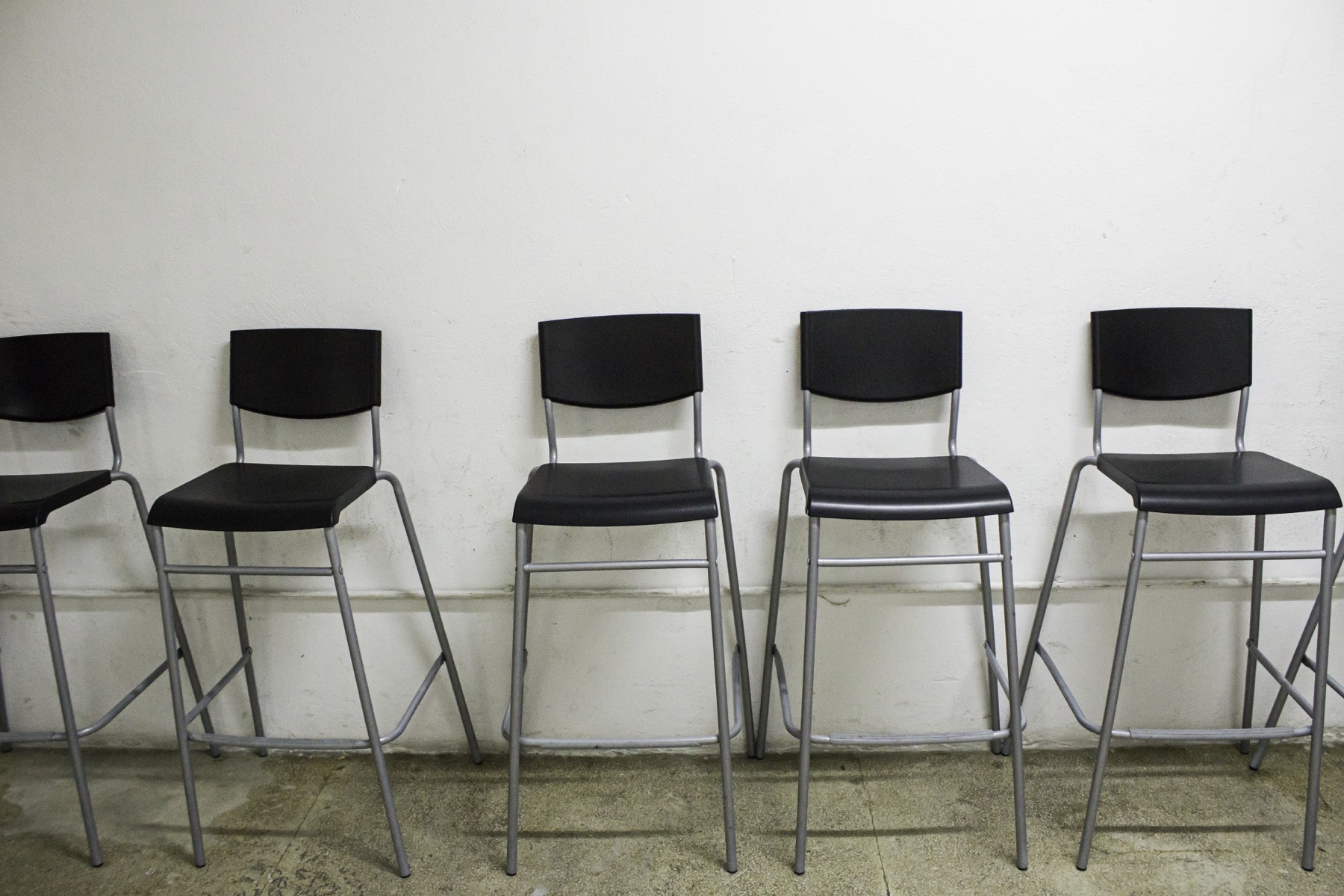
In Wendt v. Host International, Inc., No. 96-55243 (9th Cir.), decided September 22, 1997, the United States Court of Appeals for the Ninth Circuit confronted one of the hardest problems in the law of identity: what happens when a defendant evokes not a celebrity’s own face, but the fictional character the celebrity made famous. George Wendt and John Ratzenberger played Norm Peterson and Cliff Clavin, the barstool regulars on the long-running NBC sitcom Cheers. Host International, operating airport bars under license from Paramount Pictures (which owned the Cheers copyright), built lounges modeled on the show’s set and installed two animatronic robots — named “Bob” and “Hank” — seated at the bar in the Norm-and-Cliff positions. The actors sued, claiming the robots appropriated their likenesses. The district court granted summary judgment to Host. The Ninth Circuit reversed, holding that a jury must decide whether the robots resembled the actors closely enough to violate their statutory and common-law rights of publicity and to support a false-endorsement claim under the Lanham Act. The case then became a doctrinal flashpoint: on December 28, 1999, the full court declined to rehear it en banc over a sharp dissent by Judge Alex Kozinski that opened with the words “Robots again.”
At a glance
- Case: Wendt v. Host International, Inc., No. 96-55243 (9th Cir.), panel decision September 22, 1997 (125 F.3d 806); rehearing en banc denied December 28, 1999 (197 F.3d 1284).
- Posture: Appeal from summary judgment for the defendant in the Central District of California; Paramount Pictures intervened as the copyright owner of Cheers.
- Claims: California Civil Code section 3344; California common-law right of publicity; and section 43(a) of the Lanham Act (false endorsement).
- Holding: Reversed. Whether the robots constituted the actors’ “likeness” — and whether consumers would be confused about endorsement — were triable questions for a jury, not matters resolvable on summary judgment.
- Key point on likeness: A protected likeness need not be a photographic or identical reproduction; an impressionistic resemblance or caricature can suffice, and the degree of resemblance is a fact question.
- Aftermath: En banc rehearing was denied in 1999 over Kozinski’s dissent warning of conflict with federal copyright; the parties later settled.
Likeness without a photograph
The statutory claim under section 3344 required the actors to show that Host used their “likeness.” Host’s defense was essentially literal: the robots were not photographs or molds of Wendt and Ratzenberger; they were mechanical figures with their own names, and any resemblance was to the characters Norm and Cliff, not to the men. The district court accepted that framing and resolved the case as a matter of law.
The Ninth Circuit refused to draw the line so cleanly. A likeness, the panel held, does not demand identity or photographic precision. A figure that caricatures, approximates, or bears an “impressionistic resemblance” to a person can still be that person’s likeness for statutory purposes. Crucially, how closely the robots resembled the actors was a question of degree — exactly the kind of factual judgment that belongs to a jury after viewing the figures. Because reasonable jurors could find that Host had captured enough of the actors’ physical characteristics to appropriate their likenesses, summary judgment was improper. The same logic carried the common-law publicity claim and the Lanham Act false-endorsement theory, where the operative question was whether airport patrons might believe Wendt and Ratzenberger sponsored the bars.
The actor, the character, and the copyright owner
What makes Wendt genuinely difficult is the layer the typical publicity case lacks: a third party who owns intellectual property in the very thing the defendant evoked. Paramount owned the copyright in Cheers, including the characters Norm and Cliff, and had licensed Host to recreate the Cheers environment. From Paramount’s perspective, Host was using rights Paramount was entitled to license. The actors, by contrast, claimed rights not in the characters but in themselves — their own faces and physiques, which had become inseparable from the roles in the public mind.
The panel kept those two things distinct. Paramount’s copyright in the characters did not extinguish the actors’ independent right of publicity in their own likenesses. An actor who plays a role does not surrender the commercial value of his personal appearance to the studio; the studio owns the character, but the human being still owns himself. So even though Host had a license to evoke Norm and Cliff, it could still face liability if, in doing so, it appropriated the recognizable likenesses of Wendt and Ratzenberger. That separation — character rights for the copyright holder, persona rights for the performer — is the conceptual heart of the decision and the source of its controversy.
Kozinski’s “Robots again” and the copyright-preemption critique
When the court declined to rehear the case en banc, Judge Kozinski dissented, joined by Judges Kleinfeld and Tashima, in a now-famous opinion. His point was structural. Paramount, he argued, owned the copyright in the Cheers characters and had every right to license their use, including in robot form. Allowing the actors to assert publicity rights over figures evoking those characters let state law override the copyright holder’s federal rights — effectively giving performers a veto over the licensed exploitation of works they do not own. Because the federal Copyright Act preempts state-law claims that interfere with the exclusive rights it confers, Kozinski contended that the publicity claim should yield where it functions as a backdoor right to control copyrighted characters.
The dissent did not carry the day, but it crystallized a tension that publicity law has never fully resolved: when a performer’s persona and a copyrighted character are fused, whose rights govern the character’s commercial afterlife? The majority’s answer — both, with juries sorting out resemblance — left studios, licensees, and actors to negotiate in the shadow of uncertainty, and it remains a leading citation in disputes over performers’ rights in the characters they embody.
Open questions
- When does evoking a character cross into appropriating the actor? The panel made resemblance a jury question but offered no test for distinguishing a licensed use of a character from an unlicensed taking of the performer.
- How far does copyright preemption reach? Kozinski’s dissent argued the publicity claim interfered with Paramount’s copyright; the contours of preemption where persona and character overlap stayed unsettled.
- What should licensees do? A studio’s license to use a character does not clear the rights of the actors associated with it, but the decision gave little practical guidance on securing those rights.
- Does the rule favor only iconic performers? The theory depends on the public fusing a specific actor with a role; its reach to lesser-known or recast performers is unclear.
Implications
- A character license is not a persona license. Permission from the copyright owner to evoke a fictional character does not clear the separate right-of-publicity claims of the actors who played it.
- Resemblance is usually a jury question. Whether a figure — animatronic or otherwise — captures a person’s likeness rarely supports summary judgment; impressionistic similarity can suffice.
- Likeness extends beyond photographs. Robots, caricatures, and stylized figures can appropriate a likeness without reproducing a person’s exact features.
- Persona and copyright can collide. Where a performer is fused with a copyrighted character, publicity and copyright rights overlap, raising preemption questions the courts have not cleanly resolved.
- Clearance must reach the performers. Producers recreating a famous setting or character should account for the publicity rights of the actors the public associates with it, not just the underlying copyright.
Frequently asked questions
What exactly did Host International do? It operated airport bars designed to look like the Cheers set and placed two animatronic robots at the bar in the positions of the characters Norm and Cliff. The robots had different names, but Wendt and Ratzenberger — who played those characters — claimed the figures appropriated their own likenesses for commercial advantage.
If Paramount owned Cheers, how could the actors sue? Paramount owned the copyright in the show and its characters, but the actors asserted rights in themselves — their personal likenesses — not in the characters. The Ninth Circuit held that the studio’s copyright did not extinguish the performers’ independent right of publicity, so a license to evoke the characters did not necessarily license use of the actors’ likenesses.
Why is Judge Kozinski’s dissent so often cited? Because it framed the copyright-preemption problem at the center of the case: if a studio owns and can license a character, letting actors block robot versions of that character lets state publicity law override federal copyright. His “Robots again” dissent remains the leading articulation of the conflict between performers’ persona rights and copyright owners’ control of their works.
Authorities and sources
- Wendt v. Host International, Inc., No. 96-55243 (9th Cir. Sept. 22, 1997), panel opinion (125 F.3d 806) — FindLaw: https://caselaw.findlaw.com/court/us-9th-circuit/1096410.html
- Wendt v. Host International, Inc., 197 F.3d 1284 (9th Cir. 1999) (denial of rehearing en banc; Kozinski, J., dissenting), reporter text: https://law.resource.org/pub/us/case/reporter/F3/197/197.F3d.1284.96-55243.html
- Wendt v. Host International, Inc. — Harvard Berkman Klein archive of the opinion: https://cyber.harvard.edu/property/1997wend2.html
- Quimbee case brief, Wendt v. Host International, Inc., 125 F.3d 806 (1997): https://www.quimbee.com/cases/wendt-v-host-international-inc